


How to Implement a Successful Pickup Program in the Era of Free Delivery
 Avoid the delivery trap
 Avoid the delivery trap
 Build your pickup program
Measure success and scale
A Letter from Lee Lambeth, Mercatus COO
Running eGrocery operations is harder than it looks from the outside. And it already looks pretty hard to begin with.
Over the past several years, I’ve watched regional grocers face real pressure from the faster, less expensive fulfillment being offered by Walmart, Instacart, and—more recently—Amazon.
The instinct to match them on delivery is understandable. The math, unfortunately, doesn’t work.
What does work—and what our most successful retail partners have proven—is building a pickup program that plays to the structural advantages regional grocers have always had: proximity, service quality, and direct customer relationships.
Pickup protects all three. Delivery erodes them.
This guide is the most practical resource we’ve built on the subject.
It covers the unit economics, the operational decisions, the metrics that matter, and the capabilities that turn a pickup program into a long-term competitive advantage.
If you’re serious about making eGrocery profitable, this guide is the perfect place to start.

Sincerely,
Lee Lambeth, COO, Mercatus
Quick Links
Section 1: The Modern Delivery Trap
- Why You Can’t Win the Delivery Race
- The Hidden Costs of Trying
to Compete - Where Regional Grocers Actually Have Advantage
- Six Reasons Pickup is Your Strategic Play
Section 2: Building your Competitive Advantage
- Designing Your Pickup
Program - Fulfillment Models That Scale
- Technology That Drives Efficiency
- Rolling Out for Maximum Impact
Section 3: Measuring Success and Scaling Up
- Nine Metrics That Matter
- When and How to Add Delivery
- Expanding Your Pickup Advantage

The Delivery Trap
The New Rules of Grocery Fulfillment
Let’s talk about the big players:
Amazon offers same-day shipping on grocery items with no delivery fees or tips for Prime members.
Walmart+ promises sub-three-hour delivery windows bundled into a membership that costs less per month than a single third-party delivery fee.
Instacart keeps slashing delivery costs tied to aggressive subscription discounts.
The result? Fulfillment expectations have been permanently reset.
The Delivery Surge That Shifted Everything
By offering deeply discounted or free delivery through membership programs, these players have successfully reactivated lapsed shoppers and converted casual users into committed, regular buyers.
It began in the summer of 2024 and sustained itself into 2025. Month after month, delivery sales climbed as shoppers took advantage of subsidized fulfillment. Customers who once avoided online grocery—or used it sparingly—became regular users, placing multiple orders per month and driving up total eGrocery sales.
For regional grocers, this shift feels like an existential threat.
Shoppers now expect the same speed and low-cost delivery they get from Walmart+ and Amazon. When they don’t find it at their local grocer, they don’t complain. They just order from somewhere else.
The instinct is to respond in kind. Match the delivery windows. Drop the fees. Expand capacity. Compete on the same terms.
But here’s what actually happens when regional grocers try to keep pace…
What Happens When Regional Grocers Try to Compete on Delivery
Let’s walk through what happens when a mid-sized regional grocer—let’s say 15 stores across two states—decides to respond to Walmart and Amazon’s delivery push by expanding their own delivery program.
They hire more staff, open additional delivery windows, negotiate partnerships with DoorDash and Instacart to cover more zip codes, and drop minimum order thresholds to compete with Walmart+’s $35 floor.
Marketing launches a campaign promoting “same-day delivery, now available.” Orders surge. Customers love it. On paper, it looks like progress. But within weeks, the cracks start showing:
Marketplace fees erode margin in layers
The base commission (5-15% of basket value, typically around 6% for grocery) seems manageable until you add service fees (0.8-5% for payment processing and transaction handling) and marketing fees to maintain visibility in the app (up to 20% for better placement). What looked like a 6% cost becomes 15-25% when you account for everything required to stay competitive.
You lose control over the customer experience.
Late deliveries happen, but you don’t control the driver, the route, or the prioritization. Substitutions get made by an algorithm or a rushed picker who doesn’t know your customers.
Your brand becomes invisible.
Shoppers say “I ordered from Instacart” or “I used DoorDash,” not “I shopped at [Your Store].” The marketplace owns the interface, the communication, the experience. You’re reduced to an inventory source.

Customer service becomes a black hole.
There’s one exception to the rule above: When orders are late, wrong, or damaged, shoppers blame your store. Your team handles the complaints, issues the credits, and attempts damage control for problems you didn’t create and can’t solve.
In-store operations suffer.
Third-party pickers congest aisles during peak hours, compete with your regular shoppers for parking, and tie up checkout lanes. Your most loyal customers notice the difference.
Why Pickup Is Still the Best Strategic Response
Expanding delivery services trades profitability and service quality for volume. Expanding pickup aligns with what regional grocers do best: proximity, service quality, and control.
Pickup Plays to Your Strengths
But What About the Numbers?
Take another look at this chart.
Delivery has overtaken pickup as the preferred fulfillment method, but pickup is still performing at a higher level than it has in the past.
Even as Amazon drives more growth for ship-to-home, it’s not stealing away pickup customers.
In fact, YOY order frequency for pickup rose every month of 2025. And we continued to see more and more eGrocery shoppers choose multiple fulfillment methods for multiple orders in a single month.
What this reveals isn’t a fulfillment method in crisis. It’s consumers who shop moment-to-moment instead of exercising loyalty to one channel.
That creates an enormous opportunity for regional grocers to influence which method shoppers choose at each moment.
You can’t control Amazon’s same-day shipping network. You can’t match Walmart’s delivery subsidies. But you can make pickup so seamless and rewarding that shoppers choose you to provide it.
The key is understanding where pickup actually outperforms delivery.
Six Reasons Why Pickup is Your Path to Profitable Fulfillment
1. Pickup Fulfillment Costs 40-60% Less Than Delivery
You’re not paying for last-mile logistics, driver commissions, or third-party platform fees. Every dollar saved on fulfillment drops directly to your bottom line. When grocers own their pickup operations, they can offer competitive service without destroying margin.
Why it matters: Lower cost-to-serve means you can invest in better service quality, loyalty rewards, or competitive pricing while still protecting profitability.
2. Pickup Orders Show Stronger Engagement Over Time
Order frequency for pickup rose every month throughout 2025, even as delivery surged and ship-to-home expanded. The most valuable customer cohort—super users placing 4+ orders over three months—now represent nearly 60% of pickup monthly active users and spend significantly more per order than casual shoppers.
Why it matters: Pickup isn’t just a transaction. It’s a behavior that builds over time and creates higher lifetime value.
3. You Own the Entire Customer Relationship
When shoppers pick up at your store, you control every touchpoint: the order confirmation, the arrival experience, the handoff, the follow-up. You collect first-party data on purchase behavior, basket composition, and shopping frequency. You can use that data to personalize offers, optimize inventory, and build loyalty programs that actually work.
Why it matters: Customer data is the foundation of long-term profitability. Pickup preserves it. Marketplace delivery surrenders it.
4. Pickup Scales with Your Existing Infrastructure
Every store location becomes a pickup hub. You don’t need fulfillment centers, delivery fleets, or route optimization software. Advanced picking technology can reduce labor costs while increasing order capacity, allowing you to fulfill more orders per hour without adding headcount.
Why it matters: Profitability at scale requires operational leverage. Pickup provides it without massive capital expenditure.
6. Pickup Lets You Compete on What Actually Matters
Pickup lets you compete on what regional grocers do better than anyone: service quality, product selection, and community connection. Your team hand-selects produce. Your staff knows regular customers. Your store is a trusted presence in the neighborhood.
Pickup transforms these intangible advantages into measurable business outcomes: higher basket values, better retention, stronger lifetime value.
Why it matters: Speed and price are temporary advantages. Trust and quality are defensible moats.
5. Pickup Creates Cross-channel Opportunities
Nearly half of online grocery shoppers now use multiple fulfillment methods in a single month. The same customer who orders pickup one week might shop in-store the next. By owning the pickup experience, you capture behavioral data across channels and can guide shoppers toward the most profitable fulfillment method in each moment.
Why it matters: Omnichannel shoppers spend more and stay longer. Pickup is the bridge between digital convenience and in-store loyalty.
Must Read:
How to Overcome the Biggest Online Grocery Delivery Challenges Facing Retailers Today

Building Your Competitive Advantage
Own Your Pickup Experience
The numbers make a convincing case for pickup.
But a successful pickup program isn’t just about offering curbside service. It’s about designing an operation that runs profitably at scale.
Effective execution requires deliberate choices about how you source, pick, stage, and hand off orders. Get these fundamentals right, and pickup becomes a profit engine. Get them wrong, and you’ll struggle with the same margin erosion and operational chaos that plague third-party delivery.
This section walks through the key decisions that separate successful programs from expensive ones.
Designing Your Pickup Program
Success comes down to integration across three dimensions:
- Fulfillment source: Where do items come from?
- Picking method: How do you assemble orders efficiently?
- Handoff experience: How do you deliver orders seamlessly?
Fulfillment Source Options
Let’s start with the first decision: where orders are sourced.

In-store Picking
Your most accessible starting point. Pickers fulfill orders directly from store shelves, keeping operations simple and capital requirements low.

Micro Fulfillment Center (MFC)
A dedicated space (often connected to or near your store) optimized for online order assembly. MFCs use automation and optimized storage to increase picking speed and accuracy.
Recommendation: Hybrid Model
Many successful programs start with in-store picking and gradually add MFC capacity as order volume grows. This lets you scale without over-investing upfront.
Picking Methods That Drive Efficiency
The second critical decision is how pickers move through your store to assemble orders. How you structure the picking process has a direct impact on labor costs and order capacity.
Choose the wrong method, and you’ll burn hours on every order. Choose the right one, and you can fulfill more orders with fewer people.

Single-order Pick (Basic)
One picker assembles one customer’s entire order, moving through every department needed.
Best for: Low order volumes (under 20/day)
Efficiency: Lowest
Complexity: Easiest to implement

Multi-Order Wave Pick
(Intermediate)
Pickers follow optimized paths through the store, collecting items for multiple orders in a single pass without backtracking.
Best for: Moderate volumes
(20-50 orders/day)
Efficiency: Moderate
Complexity: Requires order management technology to batch and sequence items

Multi-Order Zone Pick (Advanced)
Pickers are assigned to zones (produce, dairy, center store)where they collect items for multiple orders and deliver to a staging area.
Best for: High volumes
(50+ orders/day)
Efficiency: Highest
Complexity: Requires coordination across zones and sophisticated order management

DXPro’s pick app automatically generates optimized pick paths based on each store’s unique product locations and layout. Pickers move efficiently through the store without backtracking, fulfilling more orders per shift with less labor.
Combined with real-time visibility into order flow and staging bottlenecks, grocers gain the operational control needed to scale pickup profitably—managing capacity strategically based on what each location can actually handle.
How Customers Receive Orders
The third dimension: how customers receive their orders.
This is the moment that defines the entire perception of your pickup service.
A seamless handoff builds loyalty. A frustrating wait destroys it.

Curbside Pickup
Shoppers pull into designated spots, and associates load groceries directly into their vehicle—no payment, no waiting, no hassle.
Why it works:
- Fastest handoff (target: 2 minutes or less)
- Contact-free and convenient
- Creates positive brand impression
In-Store Pickup
Shoppers come inside to collect orders, often grabbing additional items while they’re there.
Why it works:
- Increases basket size through impulse purchases
- Gives shoppers control over exact timing
- Allows for personal interaction with staff
The Recommendation: Offer Both
Let shoppers choose based on their needs.
Offering both captures different use cases and shopping moments, maximizing your pickup volume without requiring customers to adapt to a single model.
The Technology That Makes It Work
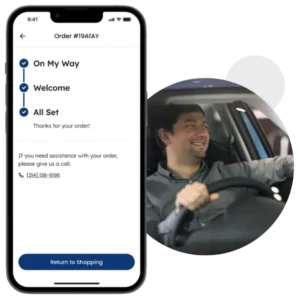
DXPro’s pick app includes built-in geo-location capabilities that notify staff when customers arrive at the pickup location. This eliminates guesswork, enables faster handoffs, and keeps wait times consistently low.
It’s as simple as this: When customers experience reliable, frictionless pickup, they come back. When they wait 10 minutes in their car wondering if anyone knows they’re there, they don’t.
Must Read
6 Ways to Increase Profitability through Grocery eCommerce Operations
Technology That Drives Efficiency
The difference between a profitable pickup program and an expensive one comes down to technology.
Without the right tools, picking takes too long, staging becomes chaotic, and customers wait in their cars wondering if anyone knows they’re there. With the right technology, you fulfill more orders per shift, reduce labor costs, and create an experience that keeps shoppers coming back.
Order Management and Fulfillment
DXPro’s pick app streamlines the entire fulfillment process from order assignment to final staging.
Real-time order sequencing
Orders are automatically organized into optimized pick paths based on your store’s unique product locations and layout. Pickers move efficiently without backtracking, reducing time per order and increasing capacity.
Live inventory visibility
Pickers see real-time stock levels, and when items are out of stock, DXPro’s algorithm surfaces substitution options directly to customers through the app.
Not only does this allow shoppers to approve or adjust replacements before the order is picked, it reduces errors, eliminates guesswork for pickers, and keeps order accuracy high without adding labor.
Performance tracking
Operations teams monitor pick times, order accuracy, and labor utilization across all locations, identifying bottlenecks before they impact customer experience.
Best for: All grocers, from single stores to multi-banner operations. Scales with your volume without requiring massive technology investment.
Location-Based Customer Communication
DXPro’s pick app also includes built-in geo-location capabilities that solve one of pickup’s biggest operational challenge: knowing exactly when customers arrive.
Automatic arrival notifications
When customers pull into the pickup area, staff receive instant alerts with order details and parking location.
Prioritized handoff queue
The system organizes orders by arrival time, ensuring no customer waits longer than necessary while managing staging capacity.
Two-minute benchmark
By eliminating guesswork around arrival timing, grocers consistently hit the 2-minute handoff target that drives repeat usage.
Why it matters: Shoppers who wait less than two minutes at pickup are significantly more likely to return. Geo-location turns wait time from a variable into a controlled outcome.
Capacity and Flow Management
Beyond picking and handoff, DXPro gives you operational control over your entire pickup program:
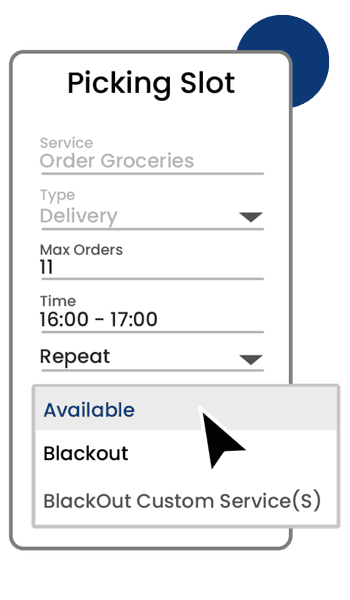
Capacity planning
Set realistic order limits by store and time slot based on actual staffing levels, preventing the overload that destroys service quality.
Lead time flexibility
Adjust preparation windows dynamically—tighten them when you have capacity, extend them during peak periods to protect margins.
Bottleneck visibility
Real-time dashboards flag staging congestion, understaffed shifts, and delayed orders before customers feel the impact.
This level of control transforms pickup from a reactive service into a strategic operation where you shape demand based on what your stores can profitably handle.
Rolling Out for Maximum Impact
A successful pickup program isn’t built overnight. It’s piloted, refined, and scaled systematically.
The goal isn’t to launch everywhere at once. It’s to prove the model works, identify what needs adjustment, and expand without overwhelming your operations.
Phase 1: Pilot (Weeks 1-8)
Start small. Select two to three high-traffic stores in different regions to test your fulfillment approach and surface operational challenges early.
What you’re testing
- Can your team handle the order volume you’ve projected?
- Are pick times realistic for your store layouts?
- Do your staging areas work, or do they create bottlenecks?
- Where do customers get confused or frustrated?
What you’re building
- Staff training protocols that work in real conditions
- Data on order volume, pick times, and customer satisfaction
- Refined processes before rolling out to more locations
Start with single-order picking and basic curbside handoff. Keep it simple. Complexity comes later, once the fundamentals are working.
Phase 2: Optimize
(Weeks 9-16)
(Weeks 9-16)
Take what you learned from the pilot and apply it to the next tier of stores.
What changes
- Upgrade to multi-order picking if volume justifies the added coordination
- Roll out to 10-15 additional locations with improved training and processes
- Test pricing strategies, promotional messaging, and customer communication
What you’re tracking
- Are pilot store metrics holding steady as you scale?
- Which stores are struggling, and why?
- What operational patterns are emerging across different markets?
This phase separates what works by luck from what works by design.
Phase 3: Scale (Month 4+)
Expand systematically across all stores, layering in advanced capabilities as operations mature.
What you’re adding:
- Advanced fulfillment technology (optimized pick paths, geo-location tracking)
- Delivery as a secondary fulfillment option (via third-party integration)
- Marketing campaigns and loyalty programs to drive adoption
What success looks like
- Consistent performance across all locations
- Predictable costs and labor requirements
- Customer satisfaction scores holding steady or improving as volume grows
Timeline
Most grocers can launch pickup at 30-50 stores within four to six months with the right technology partner. The key is moving fast enough to capture market opportunity without moving so fast that quality suffers.
Measuring Success and Scaling Up
From Launch to Long-term Profitability
Building a pickup program is one thing. Scaling it profitably is another.
This section shows you how to track what matters, identify what’s working (and what isn’t), and expand your competitive advantage without sacrificing service quality or margin.
What You’ll Learn:
Nine Metrics That Matter
The KPIs that separate profitable pickup programs from expensive ones. Track these, and you’ll know exactly where to optimize for better performance.
When and How to Add Delivery
Once pickup is profitable and running smoothly, delivery becomes a strategic add-on—not a necessity. Learn how to offer it without losing control or destroying margins.
Expanding Your Pickup Advantage
As your program matures, layer in capabilities that strengthen your competitive moat: personalization, retail media, expanded product offerings, and payment flexibility.
The Bottom Line
Regional grocers who measure consistently, optimize relentlessly, and scale strategically turn pickup into a profit engine that compounds over time. Those who launch without tracking performance struggle to justify continued investment when problems surface.
This section ensures you’re in the first group.
Nine Metrics That Matter
You can’t improve what you don’t measure. These nine KPIs tell you whether your pickup program is driving profitability and customer satisfaction or just adding operational complexity.
1. Total Pickup Orders Per Week
Your baseline growth metric. Track orders per store, not just company-wide totals.
Target: 70+ orders per week per store for profitability.
Below that threshold, fixed costs (technology, staging space, dedicated staff) eat into margins.
2. Average Order Value (AOV)
Pickup orders should generate higher basket sizes than delivery because shoppers often add impulse items when they arrive.
Target: 20-25% higher AOV than delivery.
If pickup AOV is flat or declining, investigate whether substitution issues or limited product availability are suppressing
basket growth.
3. Fulfillment Cost Per Order
Include direct labor (picking, staging, handoff), indirect labor (supervision, returns handling), facility costs (staging area, equipment), and technology fees.
Target: Keep under 8-10% of basket value.
Above that threshold, you’re spending too much to fulfill each order profitably.
4. Pick Time Per Order
How long does it take to assemble a complete order?
Benchmark:
- Single-order pick: 45-60 minutes
- Multi-order zone pick: 30-40 minutes
- Multi-order wave pick: 20-30 minutes
Longer pick times signal inefficient routing, understaffing, or inventory issues.
5. Wait Time at Pickup
Time from customer arrival to order loaded in their vehicle.
Target: 2 minutes or less.
This is the single biggest driver of repeat usage. Shoppers who wait longer are significantly less likely to return.
6. Order Accuracy Rate
Percentage of orders with no missing or incorrect items.
Target: 98%+
Every error costs you in appeasement credits, customer service time, and shopper trust.
7. Substitution Rate
Percentage of items requiring substitution due to out-of-stocks.
Target: Under 5%
High substitution rates signal inventory management problems or poor communication between your eCommerce platform and store inventory systems.
8. Customer Satisfaction (CSAT)
Survey shoppers after pickup to gauge their experience.
Target: 80% for curbside pickup
Track satisfaction by location to identify stores that need operational support.
9. Repeat Usage Rate
What percentage of pickup shoppers return within 30 days?
Target: 60%+
Repeat usage is the clearest signal that your program is working. Low repeat rates mean something in the experience is broken—wait times, accuracy, or communication.
When and How to Add Delivery
Once your pickup program is profitable and running smoothly, delivery becomes a strategic option worth considering, but make sure you move in this direction on your terms.
When Delivery Makes Sense
Add delivery when:
- Pickup operations are stable and consistently hitting performance targets
- You have capacity to absorb additional order volume without degrading pickup service
- Customer demand signals a clear need (requests for delivery, competitors offering it)
- You can offer it without destroying the margins pickup has protected
Don’t add delivery to compete with Walmart or Amazon on speed and price. You’ll lose that race.
Add delivery to complete your fulfillment offering. Give shoppers flexibility for urgent needs, accessibility for those who can’t pickup, and coverage for shoppers outside your typical store radius.
How to Add Delivery without Losing Control
The key is maintaining control while avoiding the operational burden of running your own delivery fleet.
Use Third-party Integration
DXPro integrates with delivery providers like DoorDash, Shipt, and Instacart Connect, allowing you to offer delivery while retaining control of:
- Customer data: Every order flows through your system first
- Pricing and promotions: You set the terms, not the third-party marketplace
- Order management: You control preparation and handoff
- Branding and communication: Shoppers know they’re ordering from you
This gives you delivery flexibility without the capital investment of building your own fleet or the margin erosion of full third-party marketplace dependence.
Position Delivery Strategically
Instead of speed and price, compete on:
- Quality (your team picks better than algorithms)
- Service (personal, reliable, community-focused)
- Owned experience (your brand, your data, your relationship)
Make it clear to customers:
Delivery is available when they need it, but pickup is where you excel.
The Right Sequence Matters
Lead with pickup. Build profitability, refine operations, and establish customer habits.
Once that’s working, layer in delivery as a value-add instead of a primary strategy.
Grocers who try to launch both simultaneously often do neither well. Grocers who master pickup first, then add delivery strategically, build sustainable omnichannel operations that protect margin while meeting customer needs.
Expanding Your Pickup Advantage
A profitable, stable pickup program isn’t the finish line. It’s the foundation.
Once your operations are running consistently—order volume predictable, pick times optimized, wait times under two minutes—you have something most regional grocers don’t: a controlled channel you own completely, generating first-party data on every transaction.
That’s where the real competitive advantage gets built.
The grocers who pull away from the pack don’t just maintain their pickup programs. They layer capabilities on top of them that turn a fulfillment channel into a loyalty engine. Here’s how to do it.
5 Capabilities to Add to Your Pickup Program
1. Turn Pickup Data Into Personalized Engagement
Every pickup order generates behavioral data: what customers buy, how often they order, what they skip, when they shop. Most grocers collect this data. Very few use it.
DXPro’s embedded Customer Data Platform consolidates pickup orders alongside POS, loyalty, and engagement data into a single customer profile.
That unified view is what makes personalization possible at scale.
- Automated win-back campaigns for customers who haven’t placed a pickup order in 30 days, triggered with an offer based on their most frequently purchased items.
- Frequency rewards that recognize customers who pick up multiple times per month with exclusive pricing or priority slots.
- Basket-building recommendations surfaced at checkout that increase average order value without requiring any manual merchandising effort.
- Algorithm-based substitution suggestions keeps shoppers in control of their order, leading to a stronger customer experience and a more efficient process in which pickers aren’t forced to make judgment calls.
The difference between generic promotions and personalized ones isn’t just engagement rates. It’s the customer’s perception of your store. A grocer who knows what you buy feels like your grocer. A mass retailer’s algorithm feels like noise.
2. Build Loyalty Around the Pickup Experience
Loyalty programs that treat all purchase behavior equally miss the opportunity pickup creates.
Pickup-specific loyalty mechanics give customers a reason to choose your curbside over Walmart’s delivery. That means tiered benefits tied to pickup frequency: customers who reach certain order milestones unlock perks that delivery can’t match—reserved pickup spots during peak periods, priority time slots during holidays, early access to high-demand seasonal items.
These benefits cost you little to provide. The perceived value to the customer is significant. And unlike delivery discounts, they don’t erode margin—they protect it by keeping high-value customers in your channel.
3. Activate Retail Media on Your Digital Shelf
A pickup program with stable order volume creates something valuable: a high-intent digital audience visiting your app or website regularly to place and track orders.
That audience is monetizable.
DXPro’s retail media capabilities let grocers surface sponsored product placements and brand-funded promotions directly within the shopping experience. Customers searching for salad dressing see a targeted placement from a CPG brand. The brand pays. You collect incremental revenue without adding operational complexity.
For regional grocers, retail media turns digital traffic into a revenue stream that mass retailers have been capitalizing on for years. The difference is that your audience is local, loyal, and highly relevant to regional and national CPG brands that want reach in your markets.
4. Expand Into Higher-margin Departments
Pickup programs built on center-store grocery leave significant revenue on the table.
DXPro supports ordering and fulfillment across perimeter departments—bakery, deli, catering, prepared meals—bringing your highest-margin categories into the digital pickup experience. A customer placing a weekly grocery order can add a custom cake for Saturday’s birthday party, a party platter for Sunday’s game, or prepared meals for the week.
These orders don’t cannibalize in-store sales. They capture purchases that were going to a competitor or simply not happening. And because they’re fulfilled through the same pickup infrastructure you’ve already built, the incremental cost is low relative to the revenue they generate.
5. Remove Payment Barriers That Suppress Volume
Pickup growth has a ceiling if checkout creates friction.
DXPro supports the full range of payment options your customer base needs: credit, debit, gift cards, and SNAP/EBT for eligible shoppers. EBT acceptance in particular opens pickup to a customer segment that delivery providers have historically underserved, and that regional grocers have always been positioned to serve well.
Removing payment barriers doesn’t just expand your addressable market. It deepens loyalty with customer segments that have fewer alternatives and higher price sensitivity—exactly the shoppers who will choose you consistently if you make it easy.
The Compound Effect
Each of these capabilities reinforces the others.
Personalized engagement drives pickup frequency. Higher frequency generates more data. Better data improves targeting. Better targeting increases basket size. Bigger baskets fund loyalty rewards. Loyalty rewards increase retention. Retail media revenue funds program investment.
None of this is available to a grocer relying on third-party marketplaces. All of it requires owning the channel.
That’s the strategic logic of pickup: it’s not just a fulfillment method. It’s the foundation of a customer relationship you control completely, generating compounding value over time that mass retailers can’t replicate at the local level.
This Is How You Compete
The Advantage Is Yours for the Taking
Free delivery from Walmart, Amazon, and Instacart has permanently changed what shoppers expect from online grocery.
That’s not a problem regional grocers can spend or build their way out of.
It is, however, a problem they can route around.
Throughout this guide, we’ve made the case that pickup is the fulfillment channel where regional grocers have real, structural advantages—lower cost-to-serve, direct customer relationships, first-party data, and proximity that delivery actively erodes.
We’ve shown that pickup order frequency rose every month of 2025, that super users are deepening their engagement, and that the repeat-intent gap between regional grocers and mass retailers is narrowing.

The market is far from closed. The opportunity is real.
But capturing it requires execution.
A pickup program that runs on guesswork—inconsistent wait times, poor order accuracy, no visibility into what’s working—won’t convert shoppers who’ve been conditioned by frictionless delivery. The operational fundamentals covered in Section 2 exist precisely because the experience has to be good enough to change behavior.
Get those fundamentals right, and the metrics in Section 3 will tell you clearly whether you’re building something sustainable or just adding operational complexity without return.
From there, the path is straightforward: Use the customer data pickup generates to personalize engagement, build loyalty mechanics that reward the behavior you want to see, expand into high-margin departments, and add delivery only when pickup is profitable and stable enough to support it.
That sequence matters.
Grocers who lead with delivery spend margin they can’t recover. Grocers who lead with pickup build a foundation that compounds.
The window is open. Regional grocers with the right operational approach and the right technology partner can establish pickup programs that are genuinely difficult for mass retailers to replicate at the local level.
That’s the competitive advantage worth building.
Ready to Build your Pickup Advantage?
Book a time with Mercatus to see how DXPro can help you launch, optimize, and scale a pickup program that protects margin and builds the customer relationships your competitors can’t replicate.