

 Platform Overview
 Unified Intelligence
 Customer Engagement
 Commerce and Fulfillment
 About Us
 Come Work with Us
 Newsroom
 Events
 Insights
 Blog
Blog
 Digital Grocer Podcast


Is Your Grocery Customer Data Being Used to Drive Revenue—Or Give It Away?
This article was originally published on July 26, 2018. It was updated on March 24, 2026.
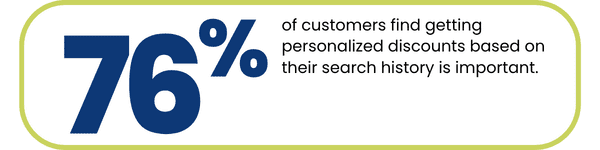
Grocery shoppers expect Amazon to remember what they bought last week. They expect Netflix to know what they want to watch tonight. They expect Spotify to understand their music taste well enough to create personalized playlists.
Then they open their grocery store’s app and get the same 20%-off coupon everyone else received.
Consumers have been trained by every other digital experience to expect personalization as standard. Grocery retailers have the customer data to deliver it—purchase history, loyalty programs, browsing behavior, basket composition, shopping frequency—but that data sits unused across disconnected systems that were never designed to work together.
POS transactions live in one database. Loyalty program activity exists in another. App usage gets tracked separately. Digital engagement generates its own reports.
Each system holds valuable insights, but none of them connect to create the unified customer profiles that enable personalization.
Trust Is There. So, Why Aren’t Sales?
Industry research from Deloitte Global and Ahold Delhaize shows consumers trust grocery stores with their data more than non-grocery retailers, other digital platforms, and even financial institutions.
But they’re still spreading their spending across multiple retailers.
This is the reality of modern grocery shopping. Shoppers go wherever the experience feels most relevant at any given moment. And because unused data makes defection invisible, most grocers can’t see high-value customers drifting away until they’ve already established new shopping habits elsewhere.
This article reveals how to turn customer data into the personalized engagement that identifies those customers before they leave and keeps them more loyal than ever.
Lack of Meaningful Engagement is Why Customers Leave
The expectation gap we refer to above isn’t theoretical.
It works like this:
A shopper joins a grocer’s loyalty program, links it to their app, clips digital coupons, and makes their first purchase. The retailer now has their email, purchase history, product preferences, and shopping frequency—everything needed to deliver personalized engagement.
What happens next?
They receive the same weekly circular email sent to 50,000 other loyalty members, with promotional offers that don’t reflect what they actually buy, product recommendations that ignore their dietary preferences, and “personalized” messaging that amounts to their first name inserted into a template.
This isn’t because grocers don’t care about personalization. It’s because their systems can’t deliver it.
The Cost of Not Engaging
When customer data sits in silos, grocers don’t identify the behavioral patterns that reveal who’s valuable, who’s at risk, and who’s already gone.
A high-value customer whose purchase frequency declines doesn’t trigger alerts because the loyalty system doesn’t connect to the eCommerce platform. A shopper who browses recipes in the app but never converts doesn’t show up as an engagement opportunity because app analytics don’t feed into promotional targeting.
By the time declining transaction frequency becomes visible in aggregate reports, that customer has already shifted significant spending to competitors, if not left your ecosystem altogether.
Meanwhile, mass retailers like Walmart and Amazon are using the exact same customer data regional grocers have. They’re just connecting it to deliver personalized experiences that create differentiation.
Marketing Strategies That Commoditize the Experience
When grocery retailers can’t personalize, they compete on price because nothing else differentiates the experience.
Generic 10%-off coupons train customers that all grocers offer the same discounts, reinforcing interchangeability.
When grocers respond to ignored coupons with deeper discounting, customers are trained to wait for sales rather than shop at regular prices.
The relationship commoditizes. Margins shrink. The cycle accelerates until the only customers responding to promotions are the most price-sensitive shoppers who were never going to be loyal anyway.
What Customer Data Actually Reveals
This outcome persists because grocers using legacy commerce systems simply aren’t seeing what their data could be telling them.
Most grocers focus primarily on point-of-sale data—what customers bought, when they bought it, and how much they spent. This is valuable for operational insights, inventory management, and supply chain optimization, but it’s telling you what already happened, not what’s about to happen or why customers made the choices they did.
Why Connected Customer Data Matters
Connecting purchase data with behavioral data reveals intent before purchase.
When a customer builds a shopping list in your app, you know what they plan to buy before checkout. When they browse recipes, you understand meal planning that will drive future purchases. Loyalty programs track patterns like the customer who buys organic produce weekly or the household that restocks pantry staples monthly.
Tracking every digital interaction—website visits, app usage, search history, abandoned carts—shows how customers research and make decisions.
What Makes Personalization at Scale Possible
When your systems are connected, a full view of customer behavior enables personalization at scale.
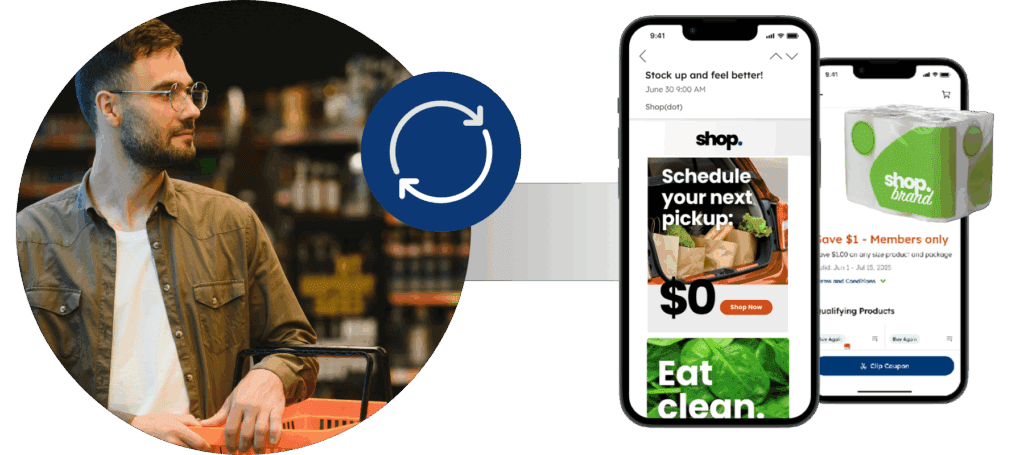
This isn’t an aspirational strategy. The technology exists. The data exists.
What’s missing for many grocers is the infrastructure that captures every on-platform interaction and connects it to the engagement tools that act on it—without requiring a complete overhaul of existing systems.
How DXPro Connects Shopper Data to Customer Retention
DXPro gives grocery retailers the engagement infrastructure to act on customer data wherever it lives. That means turning behavioral signals into personalized experiences that let regional grocers compete on relevance rather than entering price wars they can’t win.
For grocers with existing data infrastructure, DXPro’s embedded CDP handles on-platform activity specifically—capturing every click, every view, and every purchase that happens within your storefront so nothing gets missed and every digital interaction feeds directly into engagement.
From there, it creates the customer profiles that enable grocers to identify specific segments—lapsing shoppers, at-risk customers, high-value loyalists, store-only regulars—and engage them with standardized programs proven to drive retention.
From Data to Segments to Engagement
DXPro captures every interaction and signal—every click, every view, every purchase—so behavioral patterns automatically surface as actionable opportunities.
A shopper whose purchase frequency declines triggers at-risk alerts. A household approaching their typical restock cycle receives timely reminders. A high-value customer whose basket composition shifts gets category-specific offers addressing competitive pressure.
These insights feed directly into engagement programs targeting specific outcomes:
Lapsing Shoppers
Customers who’ve gone inactive for 60-120 days receive win-back offers lowering the barrier to return, combined with convenience features like one-click reorders and saved shopping lists.
At-risk Customers
Shoppers whose trip frequency or basket size is trending downward get targeted promotions addressing the specific categories where competitors captured spending.
High-value Loyalists
Customers who shop and spend more receive ongoing recognition through personalized rewards, replenishment reminders timed to their shopping cycles, and exclusive offers reinforcing their status.
Store-only Regulars
Those who’ve never ordered online get first-order perks introducing digital convenience while maintaining their in-store loyalty.
The programs work because they’re built on customer data and backed by tested algorithms developed by data scientists and retail experts working together.
Personalization That Converts
Using customer data effectively like this allows grocery retailers to maximize customer lifetime value and drive long-term profitability through engagement that acknowledges individual preferences rather than treating all customers identically.
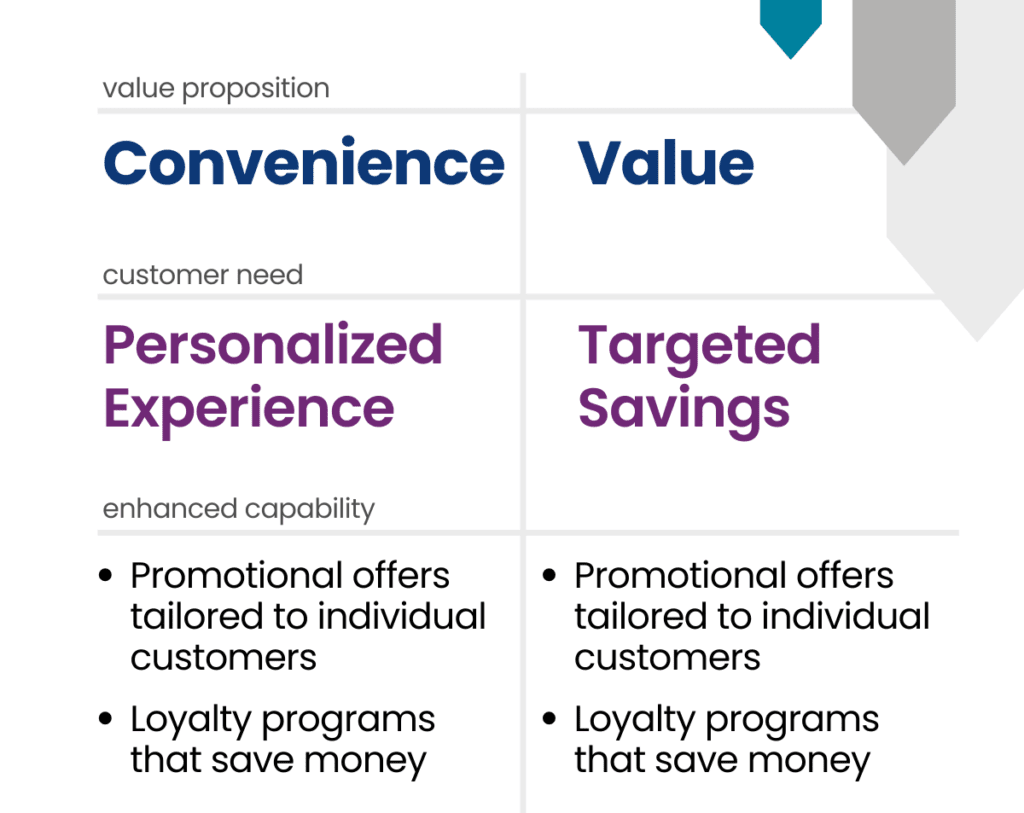
DXPro’s no-code interfaces let marketing teams create tiered reward structures in loyalty programs, adjust promotional targeting based on real-time behavior, and measure campaign performance without technical support for every iteration.
When a customer clips a digital coupon for products they actually buy, redemption rates increase. When product recommendations reflect browsing history and past purchases, add-to-cart rates improve. When promotions arrive timed to individual shopping cycles rather than generic weekly schedules, response rates climb.
Each transaction feeds back into customer profiles, refining the system’s understanding of preferences and patterns. Better data drives better engagement, which drives more sales, which produces better data.
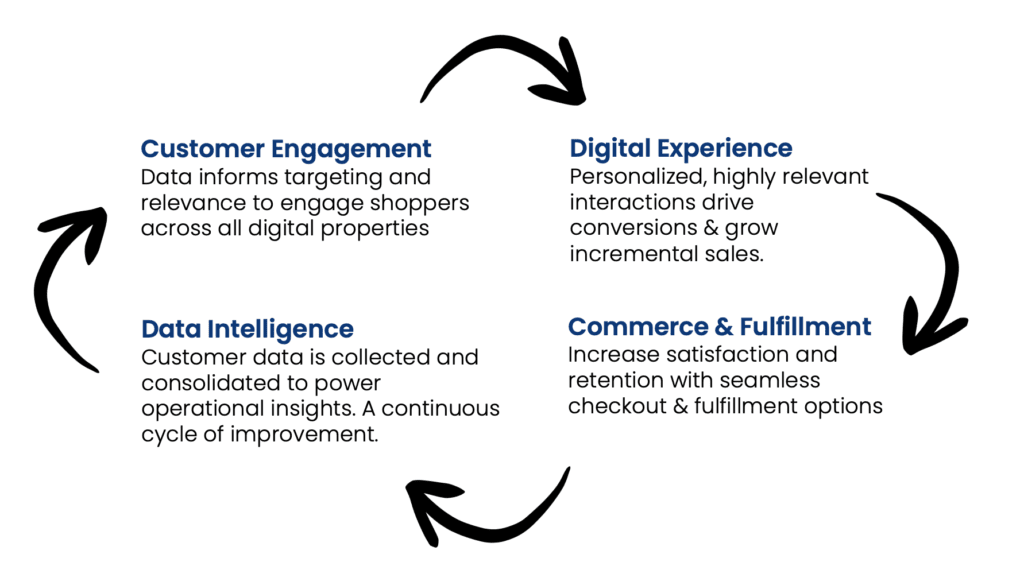
And on and on it goes.
From Generic Promotions to Personalized Engagement
The transformation from not using to using customer data changes what grocers can accomplish with their existing promotional budgets.
Higher ROI on Marketing Spend
Without using data, promotional budgets get spread across entire customer bases with no regard for relevance. A grocery retailer sending 50,000 identical emails might see 2-3% response rates because 97% of recipients receive offers they don’t want.
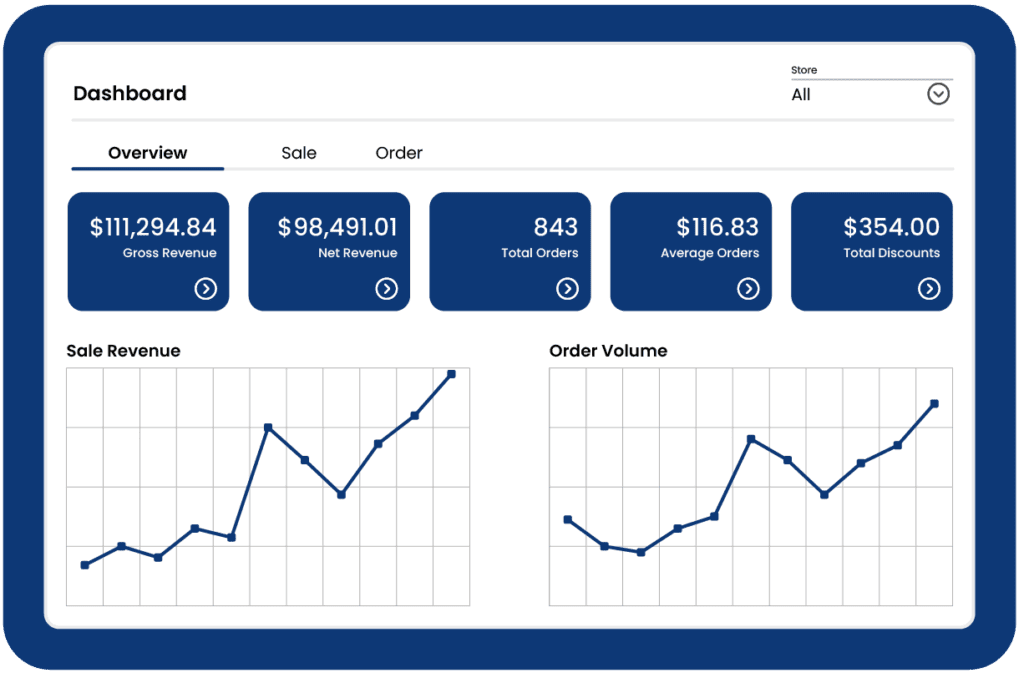
When customer data is connected to engagement, the same budget delivers targeted promotions to segments proven to respond.
The customer who buys premium products receives premium promotions. The value-conscious shopper gets different offers. The household focused on healthy eating receives discounts on products that align with their lifestyle.
Data-driven marketing strategies enhance customer loyalty and retention in grocery retail by making every promotional dollar work harder through relevance rather than volume.
Reduced Price Sensitivity
Earlier, we mentioned how when customers receive generic promotions, price becomes the primary differentiator because nothing else distinguishes one retailer from another.
This forces grocers into margin-destroying discount cycles competing against Walmart and Amazon on terms they can’t win.
Personalized engagement reduces price sensitivity by creating value beyond cost.
The customer who receives relevant product recommendations, timely reminders for items they regularly purchase, and promotions aligned with their actual preferences experiences convenience and recognition that competitors can’t replicate with generic discounting.
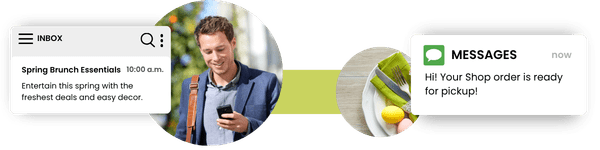
Modern consumers have higher expectations for their grocery shopping experience. Meeting those expectations through personalization protects margins by competing on relevance rather than entering price wars grocers can’t win.
Use Your Customer Data to Engage and Grow
The opportunity is clear. Customer data can enable personalized engagement that reduces price sensitivity, improves marketing ROI, and protects margins.
The infrastructure exists. Here’s how you get it:
Contact Mercatus to discuss your current infrastructure.
We’ll review where customer data sits in silos today, how you’re using loyalty programs, and the specific retention challenges you’re facing.
See what your customer data enables.
We’ll show you exactly how customer behavioral data, automated segmentation, and proven engagement programs turn missed signals into personalized experiences that keep customers shopping with you.
Implement without disruption.
DXPro connects to your existing systems and scales with your business.
Our modular architecture integrates with existing POS systems, loyalty programs, and digital platforms without complete replatforming.
Most grocery stores see measurable improvements in customer engagement as personalized experiences replace generic promotions.
Your customer data is already there. And so is our technology. Let’s put them both to work to retain more customers and build more revenue for your grocery business.
Contact Mercatus to get started.