


 Platform Overview
 Unified Intelligence
 Customer Engagement
 Commerce and Fulfillment
 Retail Media Network
 About Us
 Come Work with Us
 Newsroom
 Events
 Insights
 Blog
Blog
 Digital Grocer Podcast

Why Gen Z Shops Five Stores for A Week’s Groceries
Emma Irwin doesn’t enjoy bouncing between five different stores to get her groceries every week.
And yet, this is her regular routine.
She orders from Amazon for household staples. Goes to Whole Foods for organic produce. Visits her regional grocer for protein and dairy. Shops at a local co-op when she needs specialty items. And leaves the house to get what she wants from Trader Joe’s when she feels brave enough to take on the parking lot.
As Irwin shared in a recent article for PRWeek, no single banner delivers what Gen Z shoppers need.
They can’t find the products they discover on TikTok, the operational precision they expect from Amazon, not to mention the values alignment they don’t want to compromise on.
For regional grocers, this fragmented behavior looks like lost wallet share. But Gen Z isn’t choosing between stores on a whim. They’re using all of them because each one fails in different ways.
That presents an enormous opportunity that doesn’t require matching Walmart’s scale or reverse-engineering TikTok’s algorithm.
It’s about building infrastructure that connects what Gen Z discovers online to what they purchase, and personalizing every interaction along the way.
What Gen Z Actually Expects from Grocery Shopping
Gen Z’s expectations as described by Irwin aren’t unreasonable. They’re just different from previous generations.
Irwin’s article suggests that Gen Z expects three specific things. Most grocers treat these expectations as separate problems, but the generation we’re talking about in this article experiences all three as one unified demand:
Discovery that matches their feeds
When 77% of Gen Z discovers products on Instagram and TikTok, and 48% finds recipe inspiration on TikTok specifically, the gap between feed and shelf becomes a trust gap.
A viral chili crisp or boutique soda is proof the store understands culture in real time.
When it’s not there, Gen Z remembers.
Operational basics that match Amazon
Gen Z has been trained by Amazon and Uber to expect frictionless execution.
Real-time stock visibility. Seamless tap-to-pay. Delivery that doesn’t feel like a luxury tax. Pickup windows that actually work—10-minute handoffs, not 30-minute waits. Substitutions handled intelligently, not randomly.
These aren’t premium features to them. They’re baseline expectations.
Values alignment beyond marketing claims
Gen Z will pay $9 for crackers if they align with their values. They won’t buy cheap options that don’t.
Sustainability, transparency, and healthier options aren’t differentiators anymore. They’re filters for this demographic. And the proof has to be visible: certifications on product pages, sourcing info that’s transparent, claims backed by action.
Meeting one of these expectations is great, but it’s not capitalizing on the full opportunity.
Gen Z doesn’t segment discovery from purchase, convenience from values, or digital from physical. They expect grocery stores to know what they care about and make it easy to get.
Why Most Grocery Infrastructure Can’t Deliver
Most regionals will have an understanding of this already.
You’ve seen the sales data, and you’ve identified Gen Z as an important demo. The issue with converting Gen Z shoppers isn’t that grocers don’t understand what they want. It’s that their systems can’t execute it.
Assortment moves too slowly
Planograms are built on last year’s data and CPG relationships tend to prioritize shelf stability over trend responsiveness.
When a product goes viral on TikTok this week, grocery buyers are still negotiating contracts that won’t hit shelves for six months.
But this is hardly a grocer-specific problem. Co-ops nail curation but can’t scale. Walmart scales but can’t curate.
What makes this an issue of specific importance to regional grocers is that they sit in the middle without the tools to move fast.
Discovery and fulfillment stay disconnected
Even when stores stock the right products, shoppers can’t find them.
Apps don’t confirm real-time stock or aisle locations. Search results don’t prioritize trending items or reflect individual preferences. Product data is often too thin, with no ratings, no reviews, no rich content that builds confidence at the moment of decision.
Personalization doesn’t exist
Gen Z expects Netflix-level personalization, while grocers deliver:
- The same weekly circular to everyone.
- Generic promotions that don’t reflect dietary preferences or purchase history.
- Loyalty programs that nominally reward spending instead of behavior.
There’s no recognition of what individual customers care about—organic produce, gluten-free options, locally sourced products—because the data sits in silos across POS, loyalty, and eCommerce systems that were never built to connect.

What we’re describing here isn’t a knowledge problem. It’s an infrastructure challenge that DXPro from Mercatus is built to solve.
How DXPro Turns Behavioral Data into Personalized Discovery
DXPro’s customer data platform captures every click, search, and purchase across channels to build customer intelligence that makes every interaction smarter.
When a shopper searches for “chili crisp,” DXPro doesn’t just return generic results. It uses browsing behavior and past purchases to identify what this specific shopper has shown interest in before.
The search becomes contextual, not just algorithmic.
Product recommendations work the same way. Instead of showing “customers also bought” based on everyone’s behavior, DXPro is capable of personalizing based on the shopper’s dietary preferences, past purchases, and browsing patterns.
A customer who consistently buys gluten-free products sees gluten-free recommendations. A shopper exploring vegan options gets vegan suggestions that actually fit their values.
Retail media integration takes this further.
CPG brands can sponsor products that shoppers are already discovering and searching for instead of random placements that feel like ads.
The result: discovery that feels personal, not generic. Products that match feeds, not just inventory.
Overall, it’s a shopping experience that recognizes what Gen Z cares about before they have to explain it.
How DXPro Makes Fulfillment Reliable Without Amazon’s Infrastructure
While personalization might be the priority, Gen Z’s operational expectations are considerably higher than generations who still view delivery and pickup as a novelty.
To answer this challenge, DXPro helps grocers manage out-of-stocks before they disrupt the customer experience.
Frequent communication between DXPro and retailer systems keeps product availability current. Store teams can manually adjust what’s available or unavailable with only a few clicks.
When an item isn’t available, DXPro’s substitution feature lets customers see recommended alternatives and request substitutions directly in their cart. This turns a potential frustration into a seamless experience.
On the operational side, DXPro’s fulfillment capabilities include smart slotting and workflows that speed up fulfillment and reduce errors.

When orders are picked, the system routes pickers efficiently through the store, prioritizes items by category, and flags potential issues before they reach the customer. Geolocation tracking triggers order handoffs within minutes of arrival. The shopper pulls up, the system notifies staff, and the order comes out fast.
Flexible payment options further remove friction at checkout. SNAP/EBT, gift cards, tap-to-pay—all supported natively. No fumbling with loyalty cards or entering card numbers manually, since DXPro integrates seamlessly with your loyalty program.
Instead, a Gen Z shopper places a pickup order Tuesday night for Wednesday lunch. She adds a couple grocery items and a dessert for later. At work the next day, she gets her notification when the order is ready. She pulls up at 12:28 PM. The system alerts staff via geolocation. Her order is at the car at 12:31 PM.
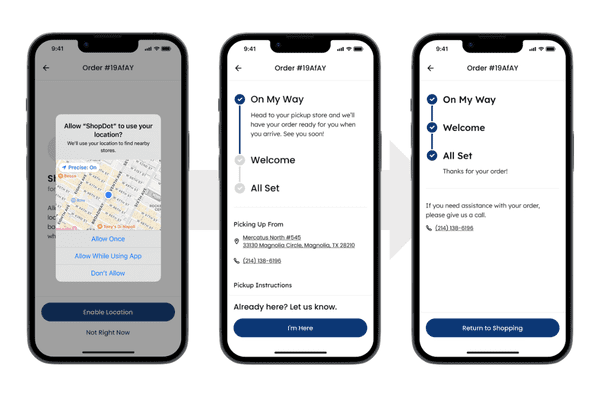
That’s the type of operational precision Gen Z expects. And it’s achievable when fulfillment is built into the same platform managing data and engagement—not bolted on as an afterthought.
How DXPro Enables Values-based Engagement at Scale
Beyond personalization and reliable fulfillment, DXPro also makes values alignment visible and actionable.
Enriched product data—integrated via Syndigo—surfaces certifications, sourcing details, and sustainability info directly on product pages.
A shopper doesn’t have to wonder whether something is organic, non-GMO, or locally sourced. It’s right there.
Targeted promotions further recognize when shoppers prioritize specific values. A customer who consistently buys organic produce gets personalized offers on organic strawberries. A shopper exploring plant-based options sees relevant discounts on vegan products. These aren’t broad campaigns. They’re individual signals turned into individual offers.
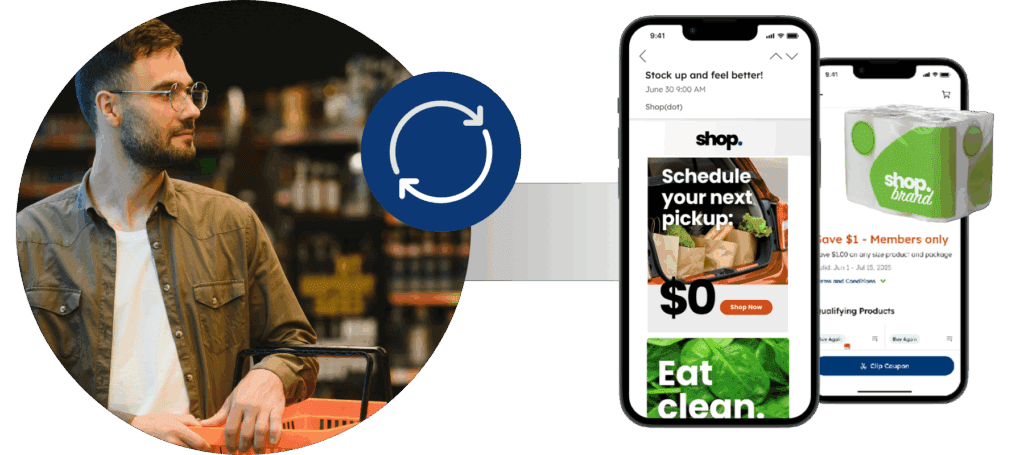
No-code customization gives grocers complete control to create relevant collections without IT support. Marketing teams can spotlight private label families, build health and wellness programs, curate school-safe allergen-free products, or feature items that earn loyalty points.
When a sustainable brand gains traction or a wellness initiative takes off, the grocer can feature it prominently without waiting for a developer to make changes.
A shopper who buys organic consistently opens the app and sees a personalized banner: “Organic Strawberries—$3.99 This Week.” She adds them to her cart. The search experience automatically prioritizes organic options. Product pages show USDA Organic certification front and center. Values filters—vegan, gluten-free, locally sourced—surface automatically based on her past behavior.
She doesn’t feel marketed to. She feels understood.
That’s the difference between values as a claim and values as an experience.
How DXPro Connects Discovery to Commerce
While DXPro can help grocers meet the expectations of Gen Z, there is a limitation to its capabilities.
At this time, it is unable to control what goes viral on TikTok.
However, DXPro can give grocers control over what happens when Gen Z acts on a TikTok product discovery.
When a product starts trending search volume spikes and add-to-cart rates climb. DXPro’s unified data infrastructure allows grocers to see these signals before competitors do.
Tailored Notifications
That opens the door to merchandising teams that can feature it prominently and shoppers who’ve shown interest getting targeted notifications: “The chili crisp everyone’s talking about is back in stock.”
Grocers can also create promotional endcap pages around trending recipes or products, and again this can be done easily without coding from a development team.
Endcap Pages
When Dubai chocolate goes viral, a retailer can instantly build a digital endcap featuring the essential ingredients (kataifi, pistachio cream, tahini, dark chocolate), add a recipe or video tutorial, and surface it across web and mobile. Or spotlight all the premade Dubai chocolate-inspired products they carry.
Web and mobile can both be updated without a new release, matching the speed at which trends actually move.
Retail Media Capabilities
Again, retail media capabilities within DXPro make this even more powerful.
CPG brands sponsoring products Gen Z already wants don’t feel like ads. They feel like discovery.
A shopper searching for “plant-based protein” sees a sponsored placement for a brand aligned with their preferences. The brand pays for visibility. The grocer earns revenue. The shopper finds what they’re looking for. Everyone wins.
What Changes When Grocers Use Unified Data to Meet Gen Z Expectations
When DXPro connects data, engagement, and commerce, the transformation isn’t just operational. It’s behavioral.
A Gen Z shopper who currently bounces between five stores consolidates spend with the grocer who gets it right.
She doesn’t need Amazon for household staples because her grocer’s app makes reordering seamless. She doesn’t need Whole Foods for organic produce because her store personalizes promotions around what she already buys. She doesn’t need the co-op for specialty items because her grocer stocks trending products and surfaces them in search.
What we’re describing here is a cyclical value exchange platform.
Personalized engagement drives repeat behavior. Every visit gets smarter because the platform learns from every interaction. Operational precision earns trust—orders are accurate, pickup is fast, substitutions are rare but connected to what the shopper actually wants. Values alignment converts trial into loyalty because the store consistently proves it understands what she cares about.
The psychological shift is profound. She moves from “I have to shop everywhere to get what I need” to “This store actually knows what I want.”

That’s not loyalty built on proximity or habit. It’s loyalty built on relevance provided by a platform that puts your customer first.
This is how regional grocers compete for an emerging demo that has infinite options.
How to Build the Grocery Experience Gen Z Expects
Meeting Gen Z’s expectations requires a unified platform, not patchwork solutions.
Adding a third-party marketplace doesn’t give you control over the experience. Hiring a social media manager won’t connect discovery to commerce. Bolting tools together that don’t share data won’t create the personalization Gen Z expects.
DXPro unifies data, engagement, and commerce in one platform built specifically for grocery.
Customer behavior informs search. Search drives conversion. Conversion generates data that makes the next interaction smarter. The loop closes instead of leaking value at every handoff.
Regional grocers using DXPro aren’t chasing Walmart’s scale or TikTok’s algorithm. They’re building infrastructure that turns Gen Z’s expectations into their new competitive advantage.
If you’re ready to see how DXPro closes the gap between what Gen Z discovers online and what they buy from your stores, talk to us. We’ll show you exactly how unified data, personalized engagement, and reliable fulfillment turn fragmented shopping behavior into consolidated wallet share.
Contact Mercatus today and make the most of the opportunity that Gen Z’s expectations create.
