


 Platform Overview
 Unified Intelligence
 Customer Engagement
 Commerce and Fulfillment
 Retail Media Network
 About Us
 Come Work with Us
 Newsroom
 Events
 Insights
 Blog
Blog
 Digital Grocer Podcast


How Retail Media Network Advertising Turns Shopper Data Into Recurring Revenue
Every search, view, and purchase on a digital storefront leaves a signal behind.
Each one pointing to something a shopper wants, something they’re about to want, or something they’ll come back for.
Most grocers are sitting on that retailer data, but very few act on it, and that’s a missed opportunity because someone else would happily pay for it.
That someone is a CPG brand.
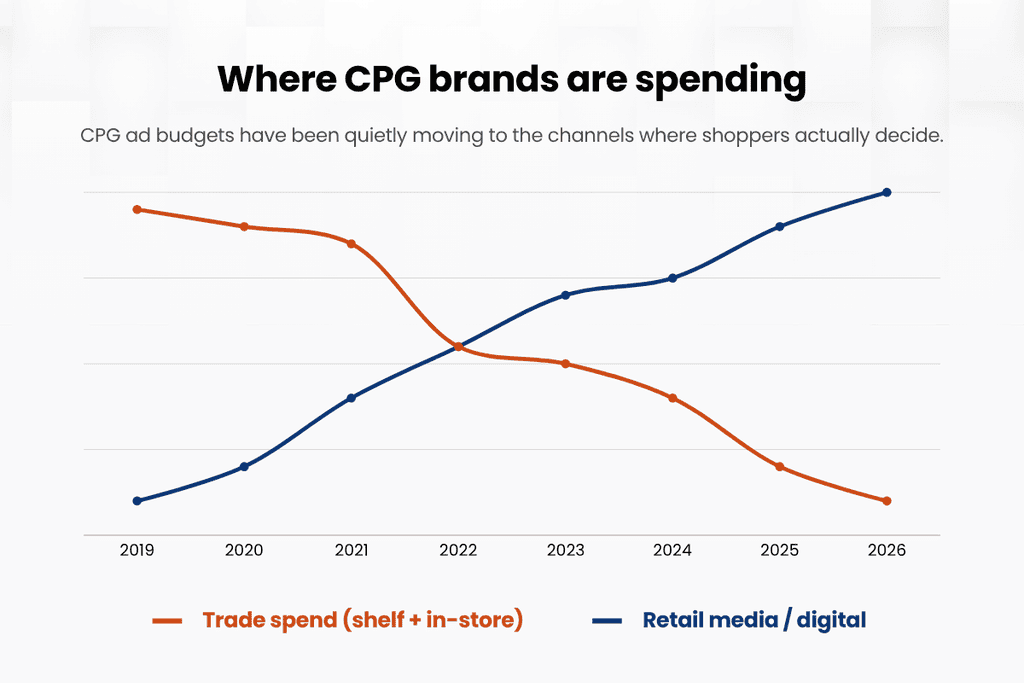
CPG brands have spent years paying for shelf placement and in-store visibility, and that spend has been steadily moving to the digital channels where shoppers actually decide what to buy.
Retailers like Walmart, Amazon, and Kroger saw where it was headed early, and built retail media networks (RMNs) to catch it, turning their own first party shopper data into new revenue streams.
But what made those networks work wasn’t the size of the retailers behind them. It was the shopper data feeding them, and any grocery retailer with digital traffic is sitting on that same kind of intelligence.
The only question is whether they’re doing anything with it.
The Opportunity Sitting Inside Every Digital Storefront
The same intelligence Walmart, Amazon, and Kroger built their retail media platforms on is quietly piling up, unused, on grocery platforms everywhere else.
And while it sits there, the ad spend that it should generate is going to other retail advertisers instead.
It’s not an easy problem to spot, because for many regional grocers, the platform isn’t capturing or reporting the signal in the first place. Shoppers search, browse, and check out every day. Every transaction clears. By any operational measure, things are working fine.
The trouble is what those transactions don’t capture.
When a shopper buys Tide, the system logs the sale. It doesn’t log the six-week repurchase clock now running. When another shopper picks Lay’s over three cheaper private label bags, the system logs the sale. It doesn’t log the brand loyalty behind it. Or, if a shopper keeps adding organic produce every month, the system logs the sale. It doesn’t log the trend.
The signal is in the data, but nothing’s capturing or reporting it.
The good news is that disrupting that pattern no longer takes a Walmart or Kroger sized budget. Any regional grocer with meaningful digital traffic already holds the same purchase histories, search behavior, and category preferences the big-box retailers monetized first, closest to the point of purchase.
What’s missing is a way to connect it.
Once that connection exists, retail media advertising is one of the first things it makes possible.
Turning Commerce Intelligence Into a Connected System
Connecting shopper data isn’t a single step.
It’s four pieces, and the long-term value only shows up when all four are in place. Any retail media strategy worth building depends on it.
First-party Intelligence
It’s the record of who’s shopping and how.
Purchase histories, search behavior, category preferences, brand loyalty, even the repurchase clock ticking on the product someone bought last week. Most retailers already have all of it sitting somewhere in their systems.
The Ability to Use That Intelligence On-site
Data only matters if it changes what a shopper sees. That starts with search, where the brand someone wants to buy shows up before the one on promotion.
From there, product rankings do quieter work in the background, holding back an item a shopper picked up last week instead of pushing it at them again. And when a premium ad placement does appear, it fits the aisle it’s sitting in, looking like any other product on a digital shelf instead of an irrelevant ad dropped on top of the page. Which allows shelf space to become ad space CPG brands are willing to pay for.
Reach Beyond The Storefront
A shopper doesn’t stay on your site all day. They scroll social feeds, check email, and open other apps.
Off-site placements follow them into those moments, often served through programmatic advertising. A video ad on streaming. An audio ad in a podcast. Digital signage across other channels. Each one is shaped by what your data already knows, and pulls them back when they’re ready to buy.
These digital ads work because the data behind them does.
Measurement That Closes The Loop
Every ad campaign has to tie back to something real. Did the ad drive a sale? Bring a lapsed shopper back? Lift the whole category?
A CPG brand needs proof of campaign performance before renewing spend, and a retailer needs proof to charge more for the next placement. The retail media insights that come out of this loop are what make data driven advertising work for both sides. Without it, both sides are guessing, and guessing is what makes ad budgets move somewhere else.
Once these four elements are wired together, retail media is one of the first things the system produces. It isn’t the goal, but it’s the clearest sign the pieces are actually connected.
And once they are, a retailer isn’t choosing between running a storefront and running a media network. They’re running one system that does both.
Where Broad Reach Meets the Right Shopper
Advertising has always been a numbers game.
Put a message in front of enough people, and some percentage will act on it. That logic is the bread and butter of a retail media network, and it stays that way. Broad advertising runs across the retailer’s digital properties, reaching a wide audience the way it always has.
What a retail media network adds is the ability to build specific audiences on top of that reach. Broad stays the foundation, but targeted audiences are the upside.
And those audiences can be built in more ways than an open marketplace allows, because the retailer already holds the signals to define them.
For example, a granola bar ad shown to everyone browsing a grocery retailer’s site converts a few of them by chance. Build an audience around shoppers who reach for a competing brand, and that same ad works harder. That’s where a rival brand has its best shot at winning the switch, and where being seen is worth the most.
When purchase history, brand preference, and category affinity are wired into a single view of the shopper, targeting stops being a demographic bracket and starts being a read on which shoppers a brand should reach.
And because that intelligence runs through the platform itself, retail media network advertising doesn’t have to sit in a separate ad slot to work.
On-site, it shows up as a sponsored result during online shopping for the brand a shopper already buys. Off-site, those same signals shape a display ad or a social post, pulling them back to a basket they left half-finished.
That’s how a retail media network pays off. Broad reach does the everyday work, targeted audiences sharpen it, the shopper sees a product that fits, and the retailer earns the placement instead of giving the ad dollars away.
How DXPro Helps Regional Grocers Develop Their Own Retail Media Network
Everything described so far already runs inside DXPro. The shopper intelligence, the on-site placements, the off-site reach, and the measurement are all there. It’s the digital experience platform regional grocers use to power eCommerce and engage shoppers, where every search, basket, and reorder feeds a single view of the shopper.
The Mercatus Retail Media Network then takes that information and turns it into revenue. Built with the specialists at Digits, it converts first-party data into on-site placements, off-site display and social, and the measurement CPG brands need to keep spending. That’s what well-run retail media offers. Reach, relevance, and proof.
The best part is what the retailer doesn’t build. No ad sales team, no CPG relationships, no campaign operations, no reporting infrastructure. Mercatus and Digits run it all as a fully managed service.
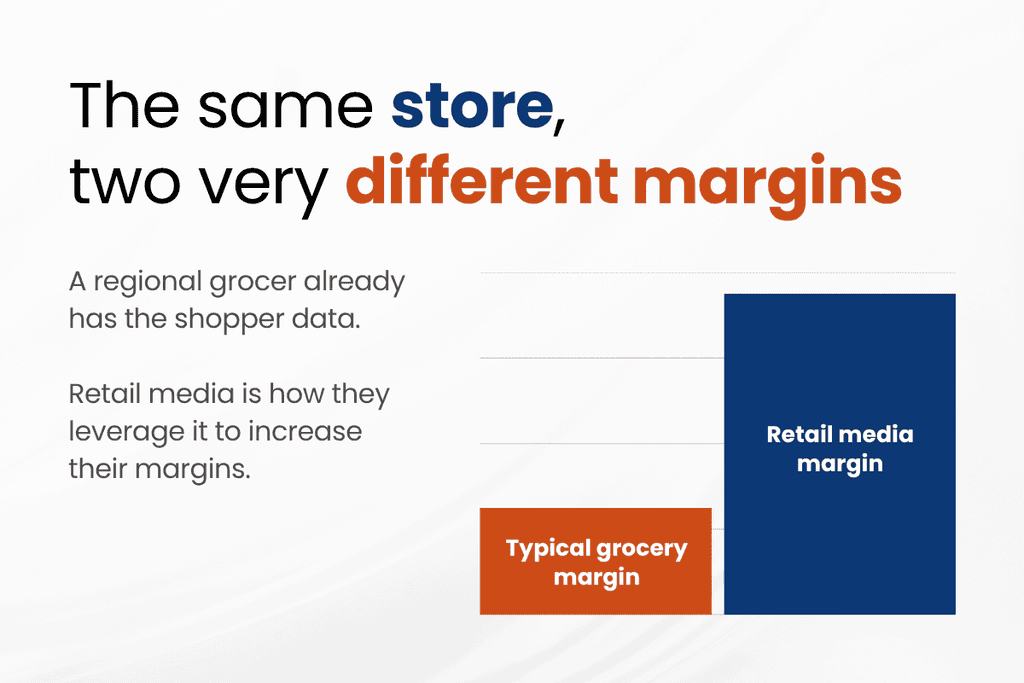
The retailer keeps their shopper data, keeps their storefront, and collects the high margin advertising revenue the network generates.
The Benefits of Retail Media When Every Interaction Counts
When commerce intelligence is connected, it creates value for everyone involved. Retailers earn new revenue from the data they already have, CPG brands reach shoppers who are ready to buy, and shoppers see a storefront that feels built around the way they already shop.
Retail media is one clear expression of that connected intelligence, but it’s far from the only one, since the same data can also shape personalization, guide merchandising, and inform the everyday decisions that keep a grocery business running well.
The value was always there in every search, view, and purchase. Connecting it is simply what makes it usable, and once it is, it tends to show up in more places than a retailer expects.
For regional grocers ready to put that intelligence to work, DXPro and the Mercatus Retail Media Network offer a connected way to turn everyday shopper interactions into a lasting source of revenue.
Book a walkthrough to see what your commerce intelligence is already worth.
