


 Platform Overview
 Unified Intelligence
 Customer Engagement
 Commerce and Fulfillment
 Retail Media Network
 About Us
 Come Work with Us
 Newsroom
 Events
 Insights
 Blog
Blog
 Digital Grocer Podcast

How To Build Grocery Shopper Loyalty with Customers Expecting Netflix Personalization
This article was originally published on April 5, 2018. It was updated on April 22, 2026.
For most of grocery’s history, customer loyalty was really just geography.
Shoppers went to the closest store. They went back the following week because it was still the closest store. Habit formed, routines calcified, and grocers read the repeat visits as loyalty when what they actually had was convenience by default.
Online grocery exposed that.
When shoppers suddenly had access to every retailer within delivery range, proximity stopped being an advantage. And what many grocers discovered was that the customers they thought were loyal were really just nearby.
Given a better offer, a more useful app, or a more relevant rewards program, customers will leave for a different grocery or, increasingly, shift to a mass retailer.
To actually build durable grocery shopper loyalty, regional stores have to provide something more than just proximity. You have to make shoppers feel understood. Not just rewarded.
What separates programs that earn genuinely loyal customers from the ones that merely distribute discounts is relevance through personalized shopping experiences.
Why Most Grocery Loyalty Programs Underperform
Think about it this way: The standard supermarket loyalty program hasn’t changed much in 20 years.
Earn points on every dollar spent. Redeem for free items or fuel savings. Show your card at checkout. Repeat.
But over the last two decades, the circumstances that dictate where a customer chooses to shop have altered wildly. Programs built for shopping impulses and motivations two decades ago can’t be expected to perform in a world where modern customer expectations have shifted with world events, financial uncertainty, and enormous technological advances.
People are more aware of their individuality than ever before, and they expect that sense of individualism to be catered to.
When every customer receives the same weekly deals, the same coupons, and the same rewards regardless of their purchase history, the program delivers savings without delivering relevance.
Customers might clip the discounts being offered, but they don’t feel loyal to those offers. They’re loyal to the discount. That means they’re always open to a better offer from the store across the street.
Data shows that loyalty programs relying on generic offers consistently underperform programs that personalize the shopping experience.
Customers expect personalized recommendations and relevant offers based on what they actually buy, not a blanket promotion for products they’ve never touched. When grocery loyalty programs fail to meet that expectation, it quietly trains customers to treat every store as interchangeable.
What Today’s Shopper Expects from a Grocery Store
The importance of personalization is a lesson that’s already been learned and put into action by larger tech companies.
Consumers who use Netflix and Spotify daily are conditioned to expect personalization. When they open a grocery store app and find the same promotions as everyone else, the contrast is immediate.
Personalized Digital Coupons That Reflect Real Purchase Behavior
But place a personalized digital coupon based on purchase history in front of them, and that offer is going to outperform blanket discounts in every metric that matters — redemption rates, customer satisfaction, and return visit frequency.
When a customer who buys organic produce every week receives targeted promotions for those items rather than deals on products they never purchase, the offer lands. When that same customer sees a coupon for something clearly irrelevant, the whole program loses credibility.
The mechanics matter less than the signal they send.
Personalized discounts tell a customer: we know what you buy, and we’re rewarding that specifically.
Generic discounts tell them: we sent this to everyone.
And once a shopper starts feeling that way, the loyalty program has already lost.
This is where most grocery loyalty programs quietly bleed out. Not from bad design. From indifference.
First, with the retailer’s toward the shopper’s actual behavior. Then, the shopper’s indifference to the retailer.
The App Is the Relationship
To reverse this dynamic, grocers have to bring engagement and interaction to the shopper between visits.
The best way to do this is through a mobile experience that treats the loyalty program as a live conversation rather than a transaction log.
When members can access exclusive discounts, track their rewards, and receive personalized offers before they’ve even written their shopping lists, the program stops being passive. That means surfacing relevant weekly deals and personalized digital coupons in-app to make loyalty part of how shoppers plan, not an afterthought when they’re already at checkout.
The more shoppers engage and interact with a platform, the more they’re likely to spend. And because they’re interacting between purchases, they generate the behavioral data that makes every subsequent offer sharper.
A Rewards Program That Actually Moves People
None of that engagement happens if the rewards aren’t worth it.
A loyalty program where members receive meaningful value on a timeline they can feel — free items they’ll actually use, BOGO deals on products in their regular rotation, discounts that apply to their unique shopping needs— keeps shoppers coming back between milestones.
Earning points on every dollar spent has to feel like progress, not accumulation for its own sake.
The Role of Data in Building Real Customer Loyalty
To provide that level of relevance to shoppers, grocers require a deep understanding of who their customers are.
Once that’s acquired, it can translate directly into the relevance of every offer, the accuracy of every recommendation, and the effectiveness of every campaign.
Grocery loyalty programs that track customer data (purchase and behavioral) can identify which customers are at risk of lapsing before they’re gone. They can see which rewards drive repeat purchases and which ones get ignored. They can build more relevant shopping lists, target the right promotions, and forecast demand.
Data-Driven Personalization Increases Customer Spending
That’s the type of loyalty program that can increase customer spending and create the difference between a customer who visits your grocery store twice a month and one who makes it a weekly stop.
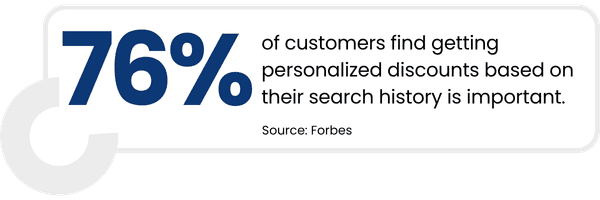
Data-driven personalization in grocery loyalty isn’t complicated in concept: understand individual habits, anticipate needs, and respond in real time with more relevant offers.
What makes it hard is execution — having the right tools to collect behavioral data, segment customers into meaningful audiences, and deliver personalized promotions at scale without a dedicated analytics team running manual exports.
Targeted Promotions Turn Insight Into Revenue
What we’re essentially talking about here is automated targeting.
When customer data — buying history, purchase cycles, browsing behavior, etc. — backs every engagement, targeted promotions can take a loyalty program to the next level.
That means delivering personalized offers at exactly the right moment when a customer is ready to refill their coffee supply, not three days after they’ve already bought it from a competitor.
This is the loyalty advantage that compounds.
Every purchase adds context. Every redeemed offer confirms what works.
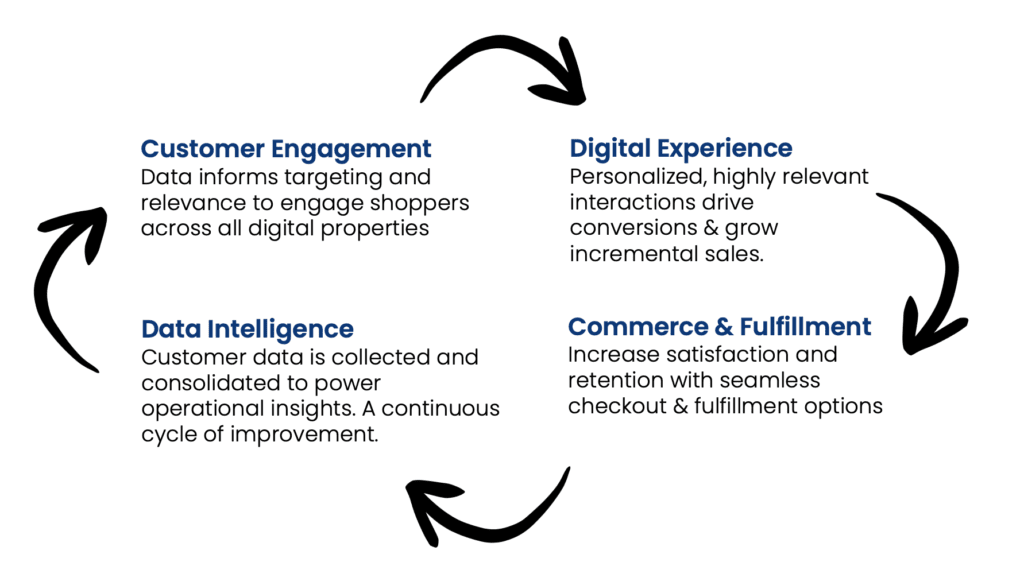
Over time, the program doesn’t just know what a shopper bought, it can predict what they need next and put the right offer in front of them before they’ve thought to look for it.
How to Build a Loyalty Program That Works
Most grocery loyalty programs that underperform aren’t poorly designed. They’re under-resourced on the data and personalization side.
In many cases, the framework is fine. The execution is where the gap opens.
Four things separate programs that earn long-term loyalty from ones that just distribute discounts.
Warm Leads
Don’t market to your entire customer base equally.
The shoppers most likely to convert into loyal members are already showing you signals — recent eGrocery customers, frequent in-store visitors, shoppers who are actively engaging with promotions but haven’t enrolled.
Use your customer data to start there.
Targeted outreach to high-intent customers will always outperform broad acquisition campaigns, and it builds the behavioral data that makes every subsequent offer sharper.
Clear Communication
A loyalty program that’s hard to understand will see high enrollment and low engagement.
Customers who can’t figure out what their points are worth, or how to redeem them, stop trying.
Be transparent at every touchpoint: show members what they’ve earned, what they can access, and how close they are to their next reward. The value proposition has to be immediate and obvious, not buried in the fine print.
Value-based Positioning
We’ve already mentioned how rewards that feel like discounts can train customers to be price-sensitive, but it’s important to emphasize that its rewards that feel like benefits that actually train customers to be loyal.
The difference is in how you position them.
A free loyalty program that delivers early access to timely deals, personalized discounts on products members actually buy, and fuel savings tied to their regular shopping behavior feels like membership. A points card that takes six months to redeem for anything meaningful does not.
Multiple Channels
Loyalty that only lives at the register doesn’t follow the customer anywhere that matters.
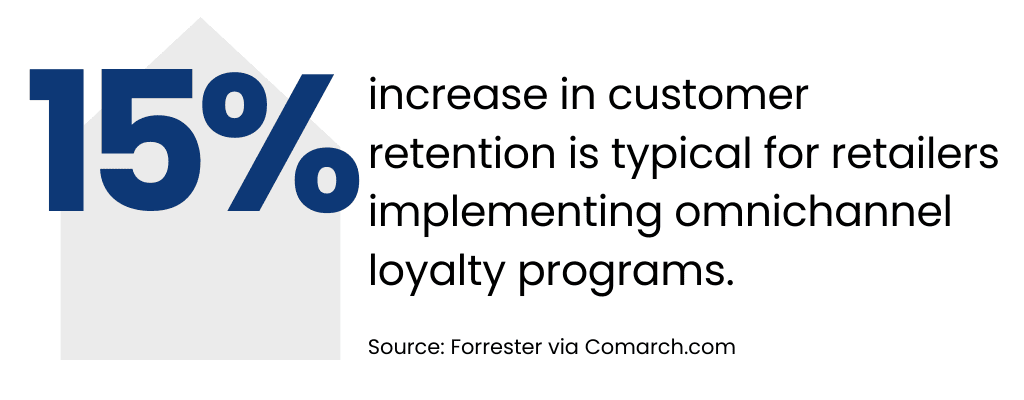
The program needs to reward behavior across both digital and in-store channels — reinforcing brand preference at every touchpoint, whether that’s an in-app personalized offer before the shopping trip, a push notification with a relevant deal mid-week, or an in-store experience that recognizes and rewards their history with your brand.
How DXPro Powers Personalized Grocery Loyalty at Scale
What those four principles require — smart targeting, dynamic outreach, transparent value delivery, omnichannel execution — is operationally demanding without the right infrastructure underneath it.
Legacy platforms aren’t built for it. They process orders. They don’t build relationships.
DXPro from Mercatus is built specifically for what modern grocery loyalty requires.
Unified Data Intelligence
Identifying warm leads manually means pulling reports, building lists, and hoping the timing is right. DXPro surfaces your most promising prospects automatically — recent eGrocery customers, lapsed members approaching churn thresholds, high-value shoppers whose engagement is slipping — and guides outreach based on real behavioral signals.
The targeting is continuous, not tied to calendar moments when someone remembers to run the analysis.
Predictive Personalization
Static scripts and blanket promotions are a ceiling. With DXPro, membership offers and loyalty campaigns are triggered by actual shopping behavior so each message reaches the right customer at the moment they’re most likely to respond.
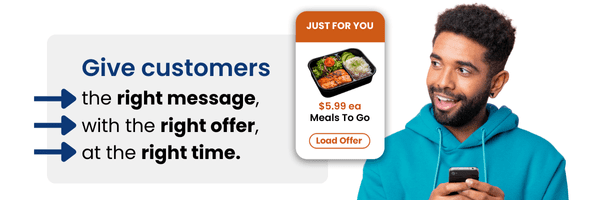
Personalization stops being a one-time effort and becomes the default.
Full Control of Brand and Customer Data
Every transaction and every interaction should strengthen your direct relationship with the customer, not a third-party platform’s.
DXPro keeps your customer data inside your branded experience, giving you the ownership required to build loyalty that accumulates for your store over time. No more running programs where the platform captures the relationship while you capture the order.
Commerce Built for Grocery
Modern grocery shoppers don’t live in one channel. They move between in-store and online, expect substitutions to be handled intelligently, want local assortments reflected in their digital experience, and need payment options that include SNAP/EBT and gift cards.
DXPro is built for that complexity, not retrofitted to handle it.
Seamless Fulfillment
A loyalty program is only as strong as the experience it promises.
Automated time slots, improved order accuracy, and flexible integration with existing delivery solutions ensure that when a member places an order, it arrives on time and as expected.
Fulfillment that consistently delivers is what turns a trial membership into a renewal.
Build Your Grocery Shopper Loyalty Program With Personalized Offers
For years, grocery stores didn’t have to earn loyalty. They just had to be close. The customers who kept coming back weren’t loyal to your store. They were loyal to the path of least resistance.
That advantage is gone.
Shoppers now have access to every retailer within delivery range, mass merchants competing on price and convenience, and apps that make switching as easy as a new download.
The only thing that replaces proximity is relevance.
A shopper who receives offers that reflect what they actually buy, provides rewards that feel worth earning, and gives them an experience that gets more personal over time isn’t staying because you’re convenient. They’re staying because your store actually knows them.
That’s what a modern grocery loyalty program has to deliver. Not points. Not blanket discounts. A consistent signal to every customer that their business is recognized and rewarded specifically.
DXPro gives regional grocers the infrastructure to build that type of program. Customer data, personalized engagement, and commerce in one platform, so that every interaction with a customer sharpens the next one, and loyalty compounds instead of leaking.
If your current program is running on decades-old proximity assumptions that no longer hold, talk to our team. See how DXPro can help you build the kind of grocery loyalty that doesn’t depend on being the closest option.
