

 Platform Overview
 Unified Intelligence
 Customer Engagement
 Commerce and Fulfillment
 About Us
 Come Work with Us
 Newsroom
 Events
 Insights
 Blog
Blog
 Digital Grocer Podcast


Why Regional Grocers Need Smarter—Not Faster—Online Grocery Fulfillment Strategies
This article was originally published on February 26, 2018. It was updated on February 23, 2026.
Regional grocers are facing a fulfillment crisis.
And it’s not going to be solved by trying to match the faster delivery windows offered by competitors.
Walmart, Amazon, and Instacart have transformed consumer expectations surrounding last mile delivery with initiatives tied to sub-three-hour delivery, same-day ship-to-home, and membership plans with unlimited free (or highly discounted) delivery.
Each initiative raises expectations for cost and convenience while requiring infrastructure most regional grocers can’t match.
The instinct is to keep pace. Add more drivers or third-party partners. Expand pickup slots. Cut lead times. But competing on speed alone drains margin faster than it builds loyalty.
This article explains why the path forward for regional grocers isn’t faster fulfillment. It’s smarter fulfillment. That means turning fulfillment logistics into a competitive advantage instead of a cost center through strategic capacity management, labor optimization, and stronger customer intelligence.
The Cost of Trying to Speed Up Delivery
Consider what would happen if a regional grocer with locations across three states tried to keep pace with the fulfillment expectations Walmart and Amazon have created.
The operations team would hire more staff, open more pickup slots for faster service, and expand partnerships with third-party delivery providers to offer more windows. Online grocery orders boom. Lead times shrink across both channels. Customers love it, and demand increases. On paper, it looks like progress.
But orders stack up during understaffed shifts. Pickers fall behind because slot capacity exceeds labor availability. Substitutions increase as teams rush to meet impossible timelines. Staging areas become bottlenecks as pickup orders compete for space with delivery orders.
The customer experience deteriorates precisely when volume is highest, whether they’re pulling into a curbside spot or waiting at home for a same-day delivery that’s running late because picking took too long.
Even when orders do go out on time, the unit economics won’t work.
Fulfillment costs per online grocery order climb as overtime surges and efficiency drops. The grocer pays substantial commission fees to third-party delivery platforms while absorbing the operational chaos of fulfilling those orders under compressed timelines. Meanwhile, delivery customers who experience late or inaccurate orders blame your stores.
The real damage isn’t visible in a single metric. It shows up in razor thin margins that can’t sustain growth, burned-out teams who can’t maintain quality, and shoppers who remember late orders more than fast ones.
Speed, it turns out, is expensive. For most regional grocers, it’s a race that’s not worth competing in.
Strategic Fulfillment Can Be a Competitive Advantage in the Grocery Industry
The right competition won’t lead to abandoning speed. It requires reframing what actually makes online fulfillment profitable for regional grocers.
Mass retailers win on infrastructure because they can afford fulfillment centers, distribution networks, and technology platforms purpose-built to deliver groceries at scale. Regional grocers don’t.
But what regional grocers do have is proximity, local credibility, and the ability to make smarter decisions about when, where, and how to fulfill orders.
These are the decisions capable of protecting margin without degrading customer experience.
In-store Pickup or At-home Delivery? Not All Orders Are Equally Profitable
Strategic grocery fulfillment starts with recognizing that not all orders are equally profitable.
A pickup order placed with 24 hours of lead time, picked during a well-staffed morning shift, and collected on time costs significantly less to fulfill than a delivery order placed for the same evening during a holiday rush.
The question becomes whether you can guide customers toward the fulfillment methods and timing that reduce costs and protect margin without degrading their experience.
The answer is yes—if you have the right fulfillment strategy in place.
The Right Fulfillment Strategy
This means managing capacity based on actual labor availability rather than aspirational throughput.
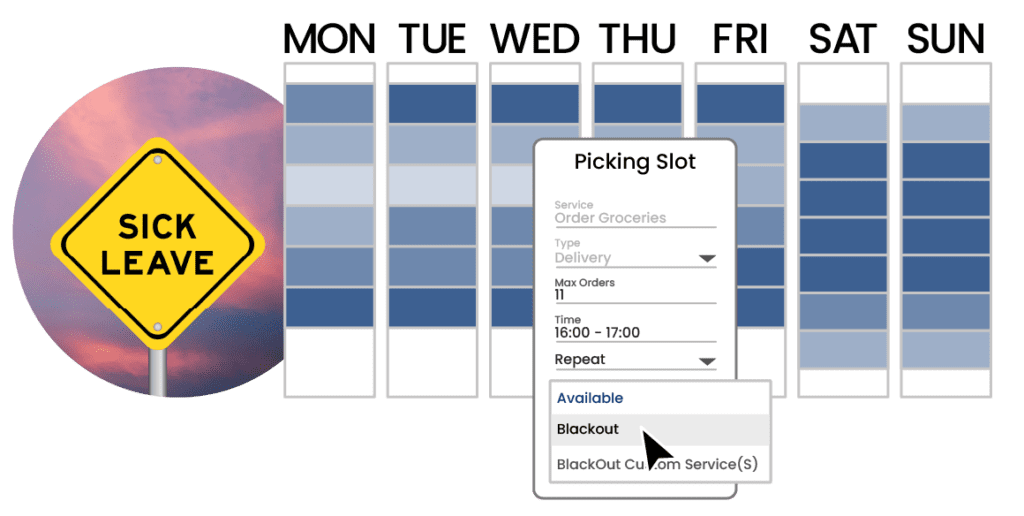
It means setting lead times that reflect real operational constraints instead of competitor benchmarks. And it means using data to identify which customers are worth incentivizing toward more profitable fulfillment options and which ones will churn regardless of what you offer.
When fulfillment decisions are made strategically, operations become predictable. Teams know what they can handle. Customers get reliable service.
That’s how a grocery business protects margins while still meeting modern expectations for convenience.
How DXPro Turns Fulfillment Strategy into a System
For many regional grocers, the approach outlined above isn’t possible with their current legacy platforms and fragmented tech stacks that require them to manage online orders through a patchwork of disconnected tools.
One system for pickup scheduling. Another for delivery routing. A third for labor planning. When volume spikes or conditions shift, the gaps between these systems become operational failures.
DXPro solves this by unifying fulfillment management as part of a single platform, specifically designed for grocery. This isn’t just a fulfillment management system. It’s a digital experience platform that makes fulfillment decisions strategic rather than reactive.
Because everything—customer data, shopper engagement, loyalty programs, commerce—connects through one system, the platform is able to give grocers control over three critical fulfillment levers: capacity planning, lead time management, and real-time visibility into order flow.
These aren’t separate features. They’re integrated components of a system that makes fulfillment decisions measurable and adjustable based on what’s actually happening in the store.
Capacity & Pick Path
Instead of opening slots based on demand alone, grocers set realistic capacity limits by store—some stores are busier than others—matching staffing levels throughout the day to what each location can properly handle.
Pick paths are automatically generated based on product locations in the product data ingest, ensuring pickers move efficiently through each store’s unique layout.
Instead of opening slots based on demand alone, grocers set realistic limits that match staffing levels throughout the day.
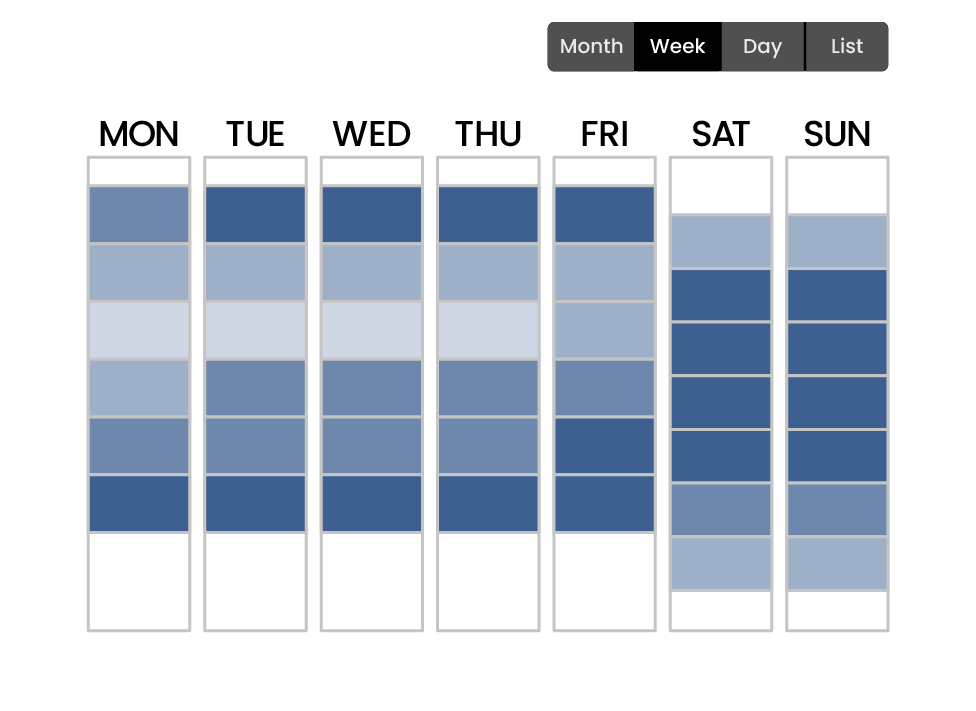
That means scheduling morning shifts with full teams that can handle higher volume, reducing capacity during afternoon lulls, and adjusting evening pickup windows based on part-time availability.
Lead Time Management
DXPro lets grocers define minimum preparation windows by service type—pickup, delivery, ship-to-home—and adjust those windows dynamically as conditions change.
These adjustments operate at a highly strategic and specific level. For instance, a location with limited staging space or constrained inventory can set lead times that give the team the right amount of time to prepare orders properly. A store with strong capacity and deep inventory can tighten windows to offer faster service.
During anticipated demand spikes like holidays, lead times can be extended across all locations to spread volume more evenly, prevent operational breakdowns, and keep everything profitable.
Real-time Visibility
See exactly where pressure is building before it affects customers.
Order tracking highlights delays. Labor dashboards surface understaffed shifts. Staging monitors flag bottlenecks. Operations teams see problems as they develop and are able to make adjustments on the fly.
The result is a fulfillment operation that doesn’t just react to demand. It shapes demand in ways that keep the business profitable.
What Changes for Grocery Retailers
When fulfillment moves from chaos to control, the operational advantages compound quickly.
Labor Costs Stabilize
When teams work predictable schedules aligned to actual order volume and have automated pick paths that optimize picking efficiency, overtime drops because capacity never exceeds what staff can handle.
Turnover also decreases as employees stop feeling overwhelmed by impossible workflows. And order accuracy improves because pickers have easy routes and adequate time to locate items, communicate substitutions, and stage orders properly.
This also reduces mistakes that lead to customer complaints and product waste.
Customer Satisfaction Increases
Shoppers learn they can count on reliable lead times and consistent service, which drives repeat behavior and the ability to retain customers. Even when delivery or pickup windows are longer than competitors, customers stay loyal because the experience is dependable rather than unpredictable.
With optimized pick paths, grocery items are collected efficiently. Not only do pickers locate items significantly faster, but they’re also able to communicate substitutions and stage orders properly. Fewer mistakes mean fewer customer complaints and less wasted product.
Margin Protection Becomes Measurable
When all of this happens, grocers can calculate the cost difference between fulfillment methods and use that intelligence to guide customer behavior.
For instance, a targeted offer that shifts a delivery customer to pickup saves money and preserves capacity for higher-margin orders.
This level of strategic fulfillment doesn’t eliminate trade-offs, but it makes trade-offs visible, quantifiable, and manageable.
Protecting Profitability During Peak Demand
At no point does that matter more than when demand spikes.
And that’s when the benefit of DXPro’s fulfillment capabilities really shine, during holidays, after weather events, when promotional campaigns hit harder than expected, or when external factors like SNAP payment timing shift market dynamics.
Most grocers respond to events like this by opening more slots, extending hours, and hoping labor can keep up. But then, we see a replay of the example we talked about at the beginning: overtime costs explode, accuracy drops, and teams burn out just as the business needs them most.
Every operational mistake during peak periods creates customer experiences that damage retention long after demand normalizes.
DXPro lets grocers set capacity targets that reflect actual operational limits. If staffing maxes out at 50 pickup orders per shift, capacity caps at 50. If morning crews can handle more volume than evening crews, slot distribution adjusts accordingly. If certain days show consistent overload, lead times extend earlier to spread demand more evenly.
Visibility tools show when staging reaches capacity, when pickers fall behind, and when substitutions climb. With these signals, grocers can make adjustments that prevent breakdowns before customers feel the impact.
The grocer that manages peak demand strategically exits high-pressure periods with protected profitability, stronger retention, and teams that aren’t exhausted. That’s the competitive advantage regional grocers need when mass retailers have already won the infrastructure game.
The Path Forward for Sustainable Growth
The biggest players in the grocery industry have set expectations around speed and convenience that most regional grocers can’t match through infrastructure alone. Trying to compete on those terms leads to margin erosion, operational chaos, and customer experiences that undermine decades of local trust.
That’s why grocers have to shift the basis of competition from delivery speed to fulfillment strategy; from reacting to every market pressure to shaping customer behavior in ways that protect profitability while delivering the reliability shoppers expect.
DXPro gives regional grocers the unified platform to execute that strategy. Strategic capacity planning, intelligent lead time management, and real-time visibility turn fulfillment from a cost center into a competitive advantage.
If your current approach to grocery fulfillment is straining operations and eroding margin, the solution isn’t chasing unsustainable speed. It’s booking a time to talk with us about how DXPro can align fulfillment with profitability for your grocery business.