


 Platform Overview
 Unified Intelligence
 Customer Engagement
 Commerce and Fulfillment
 Retail Media Network
 About Us
 Come Work with Us
 Newsroom
 Events
 Insights
 Blog
Blog
 Digital Grocer Podcast
How to Make Online Grocery Pickup Attractive in the Era of ‘Free Delivery’
This article was originally published on January 22, 2021. It was updated on February 24, 2026.
Free and fast delivery has become the new standard for online grocery shopping.
What started as promotional membership offers from Walmart and Instacart (and more recently includes the same-day delivery from Amazon for Prime members) has evolved into a permanent expectation that’s reshaping how customers choose where to buy their groceries.
For regional and independent grocers, this shift has created an enormous strategic challenge.
The infrastructure required to offer free or deeply discounted delivery is immense. While mass retailers and other big players in the industry can absorb the cost to offer it at scale, regional grocers can’t match their offers without losing profitability.
The challenge only becomes more severe when you consider the spin-off effect of deeply discounted membership offers with free (or near-free) delivery attached.
When delivery is bundled with membership programs, mass retailers gain something more valuable than a single transaction. They gain a consistent stream of customer data, shopper loyalty, and the foundation for long-term retention.
This article explains how mass retailers are using free delivery to their advantage, why regional grocers can’t compete on the same terms, and how pickup—when done right—can be the strategic response that protects both margin and customer relationships.
Why ‘Free Delivery’ Works for the Big Players
The model for mass retailers and large third-party delivery partners is simple:
- Offer deeply discounted annual membership plans to shoppers with no-to-low delivery fees attached.
- Use scalable fulfillment infrastructure to provide the service.
- Gain more sales from customers attracted by the combination of value and convenience.
- Collect data from these customers and use it to continue offering them “irresistible” offers that lead to more loyalty and better retention.
The plan has been in effect for nearly two years, and the results validate the strategy.
Overall eGrocery adoption has risen, lapsed and infrequent shoppers have come back to delivery services, and delivery (alongside Amazon’s ship-to-home) as a fulfillment method has seen record growth in online sales.
First-order Economics Create Immediate Value
When customers place their first order through a membership program, the perceived savings are immediate.
Free delivery on groceries arriving at their door, no minimum purchase requirements, and expedited options for when they need items quickly.
Repeat Orders Build Platform Dependency
Each subsequent order makes switching harder.
Customers save their favorites, navigate familiar interfaces, and consistently receive personalized recommendations. The app or desktop interface becomes the default way to start shopping online.
The Problem Regional Grocers Face
For regional grocers, this creates a two-fold problem.
The infrastructure required to match these delivery offers—whether through third-party partnerships or owned fleets—consumes margin that regional grocers can’t absorb.
Third-party fees take a substantial cut from each order. Building a proprietary delivery operation requires capital investment that most regional grocers wouldn’t be able to access.
Even with full fees, the profitability of delivery pales in comparison to the alternatives of in-store shopping or pickup. When customers click “checkout” and select delivery, they’re triggering larger costs for grocers to cover.
Delivery also diminishes a core competitive advantage that grocers possess: proximity.
When shoppers choose delivery, they’re not building familiarity with a nearby location, discovering new products in aisles, or interacting with staff.
Proximity stops mattering when someone else brings groceries to the door.
That’s how mass retailers use delivery to disintermediate the advantages regional grocers have always relied on: local presence, personal service, and community connection.
Why Pickup Still Matters
While the context above may seem discouraging, it would be wrong to assume that the value and convenience of free and fast delivery has led to the total demise of pickup.
Pickup is Holding Ground
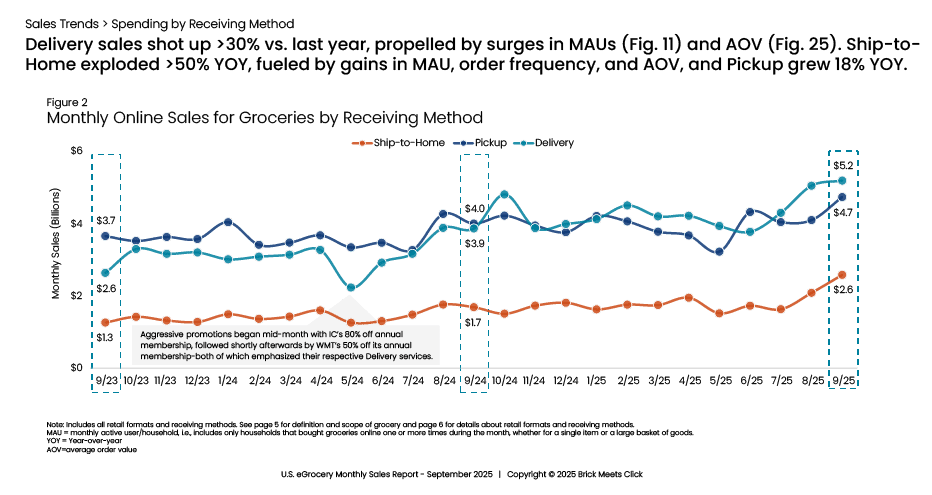
Despite the aggressive delivery promotions throughout last year, pickup remains a significant part of online grocery sales.
Average order values continue growing year over year, and nearly half of monthly active users now rely on multiple fulfillment methods.
Customers aren’t abandoning pickup. They’re choosing it when the experience works for them in a specific moment.
Another important data point from 2025 is how the repeat-intent rate gap between regional grocers and mass retailers has narrowed. More and more shoppers, month-after-month, are saying they’ll return to using the same service from the same grocer in the next period they shop.
Together, these two findings suggest that customers are ready to deepen loyalty with regional grocers if the experience justifies it.
Pickup is the Channel Grocers Can Win
That’s not just a glimmer of hope for grocers. It’s evidence that pickup will always be a strong fulfillment option even when pitted against the strong offers of big players.
By improving pickup services—offering flexible time slots, reducing wait times with geolocation, and bundling pickup with loyalty perks—grocers can still create a compelling, cost-effective alternative to delivery, even when delivery is deeply discounted and convenient.
Pickup protects margins. It preserves proximity. It keeps customers coming to the store. And when done right, it gives regional grocers the competitive edge they need to hold market share in an era dominated by free delivery.
Compete on Value, Not Price
But to make pickup work in the era of free delivery, it’s going to take effort on the part of grocery retailers.
Not only does fast and free delivery from Walmart, Amazon, and Instacart provide convenience and value; the convenience and value is consistently communicated and reinforced.
Regional grocers can’t match free delivery, but they can apply the same principles to pickup.
Strategy 1: Waive Pickup Fees Through Subscription Plans
Many regional grocers still charge fees for curbside pickup.
By offering subscription plans that waive these fees or provide expedited service, grocers create differentiated value.
This appeals to price-sensitive customer segments who might otherwise assume online grocery shopping is too expensive.
When grocers remove that barrier, they unlock a customer base that values both convenience and cost control.
Strategy 2: Emphasize Advantages of Curbside Pickup Locations
Fast and free delivery provides both value and convenience. But that doesn’t eliminate the reliable advantages of pickup.
Grocers should emphasize to their customers in their marketing what pickup offers that delivery doesn’t:
No Delivery Fees
Not all mass retailers have jumped aboard the “free delivery” train. Tell customers that pickup allows them to keep more of their grocery budget for groceries.
No Waiting Around
Customers control exactly when they receive their order. There’s no anxiety around groceries being left at a door for an hour in the sun or a delivery driver surprising a customer at “the worst moment possible.”
Direct Store Connection
Pickup orders are handled by trusted store staff, not third-party drivers. Produce is chosen carefully, not thrown in the cart to be squished by heavier objects.
Simplified Purchases
ID verification for something like an alcohol purchase happens at the pickup location, not at the door while a customer tries to settle down barking dogs in their housecoat.
Total Timing Control
With pickup, customers always decide when, where, and how they get their groceries.
Strategy 3: Make Pickup Feel Premium Through Personalization
Every pickup order generates valuable customer data—purchase preferences, order frequency, and typical basket composition. Grocers can collect, consolidate, and use this data to make pickup feel like the smarter, more rewarding choice.
Offer Pickup-Exclusive Deals
When customers consistently choose pickup, reward that behavior with personalized offers only available at curbside pickup locations. Special pricing on their frequently purchased items, early access to limited stock products, or bonus loyalty points for pickup orders all reinforce the value of choosing pickup over delivery.
Tailor Pickup Communications
Automated campaigns can reach out to customers who haven’t placed a pickup order in a while with highly relevant promotions based on past purchases. Remind them of the convenience and savings they experienced and make it easy to start shopping again with a pickup timeslot that fits their schedule.
Build Loyalty Around the Pickup Experience
Loyalty programs that tier benefits based on pickup frequency create stickiness. Customers who reach certain pickup milestones unlock perks like priority pickup times, reserved parking spots at the pickup location, or exclusive access to high value items during peak seasons.
When customers receive this level of personalized attention through their pickup orders—offers tailored to their habits, rewards for their loyalty, and communications that feel relevant—they choose the grocer who knows them over the mass retailer who doesn’t.
How DXPro Makes Pickup Competitive
Looking at the strategies outlined above, it becomes clear that grocers need a combined force of operational tools and customer engagement capabilities to make pickup work in the era of free delivery.
It’s no use offering streamlined pickup options if customers aren’t engaged in using them. Likewise, what’s the point of engaging shoppers with pickup offers if operations can’t fulfill those orders?
That conundrum is what makes DXPro such a valuable solution for grocers.
Our unified digital experience platform not only brings customer data, shopper engagement, and eCommerce together, it also gives grocers the specific fulfillment capabilities needed to solve pickup’s most persistent problems.
Smart Fulfillment Management Increases Capacity
DXPro gives grocers real-time control and visibility to manage pickup capacity from a central hub.
You can open more pickup slots when needed, adjust lead times, and monitor pressure points. With every change, grocers see its impact on labor, staging, and order flow before you commit.

The platform’s scheduling visibility spans hourly, daily, weekly, and monthly views, allowing you to filter by service or order type and respond quickly to shifting demand. Order tracking also identifies bottlenecks before customers are affected—highlighting delays, overloaded staging areas, or slipping pick times—so you can make adjustments on the fly based on real-life conditions.
On the floor, the Mercatus Pick App makes the actual shopping process faster and more efficient. Faster picking not only reduces fulfillment time, it leads to shorter wait times and more available slots, which both contribute to happier customers.
This level of operational control makes it possible to expand pickup capacity without adding unsustainable labor costs, turning pickup into a profitable, scalable channel.
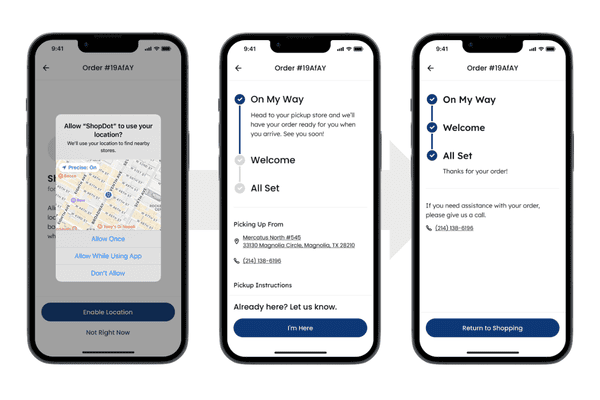
Geo-Location Support Reduces Wait Times
DXPro’s native pick app includes geo-location capabilities that help grocers reduce wait times at the pickup location.
This tool notifies staff when customers arrive, enabling faster handoffs and eliminating the frustration of long waits at the curb.
By reducing uncertainty around pickup timing, grocers can deliver the smooth, efficient experience customers expect without the infrastructure costs that are common with delivery.
Unified Customer Data Powers Engagement
DXPro ties every pickup order back to a complete customer profile, enabling the personalized offers that build loyalty.
Grocers can view purchase history, learn preferences, and create automated campaigns that resonate all from a single platform that connects pickup orders to email, website, and app engagement.
Flexible Payment Options Reduce Barriers
DXPro also supports multiple payment methods—including EBT for eligible customers—ensuring pickup is accessible to all shoppers.
Easy checkout reduces cart abandonment and makes the transition from browsing to purchase seamless, removing friction at the moment customers are ready to place their order.
Together, these capabilities turn pickup from a lagging channel into the competitive advantage it should be for grocers. By protecting margin and preserving customer relationships like this, DXPro gives regional grocers a way to compete against free delivery without burning profitability.
The Path Forward
The bottom line is that free delivery isn’t going away.
Mass retailers and large third-party providers have the infrastructure and the economics to keep offering it, and customers have come to expect it.
But even with this shift in consumer preference and expectation, regional grocers still have something that competitors can’t replicate: proximity, trust, and direct relationships with the communities they serve.
Pickup is how you protect those advantages.
The grocers who invest in making pickup work—through expanded capacity, faster handoffs, and personalized engagement—will deepen the customer relationships that have always been their unique selling proposition.
Ready to make pickup your competitive advantage?
Book a time with Mercatus to learn how DXPro can help you optimize fulfillment, reduce wait times, and turn pickup into a profitable customer retention driver.
